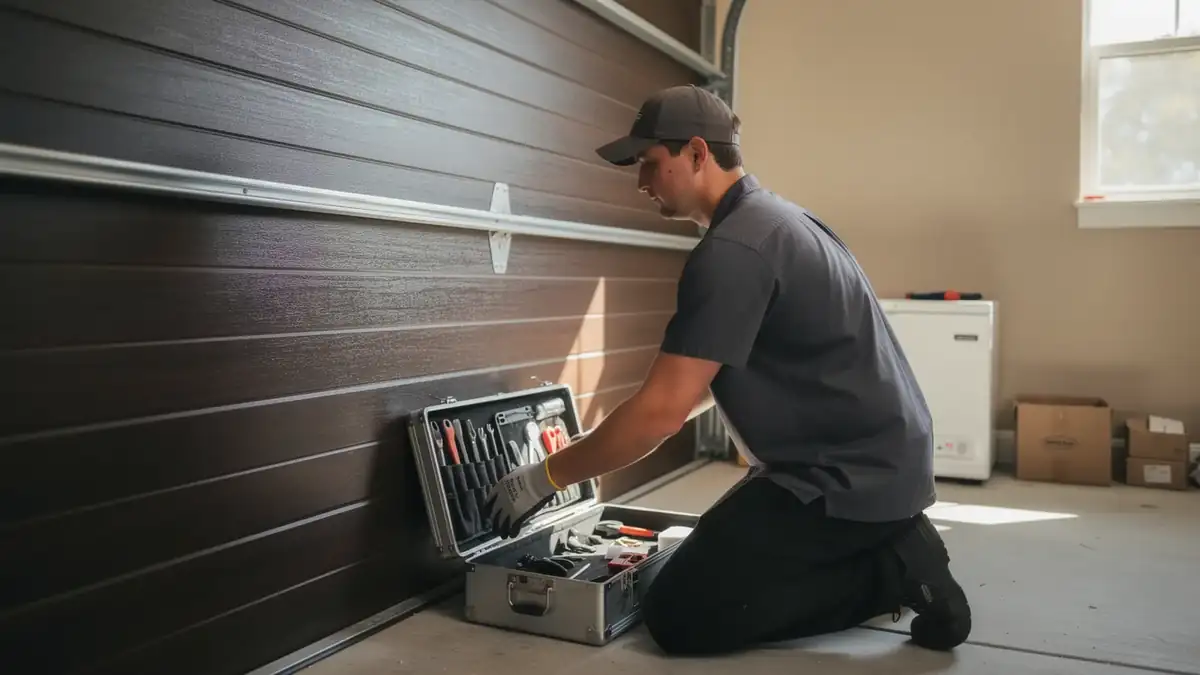
The Seasonal Bit
Cleveland sits in a cold-moderate climate band, which means the steel in a torsion spring and the galvanized cable on your door both see a real swing between a January morning and an August afternoon. That swing matters more than people think. Cold steel contracts and loses a little flex, so a spring that's been doing fine all summer can snap on the first hard freeze of the year. We see this pattern every winter - calls spike when the temperature drops fast rather than gradually.
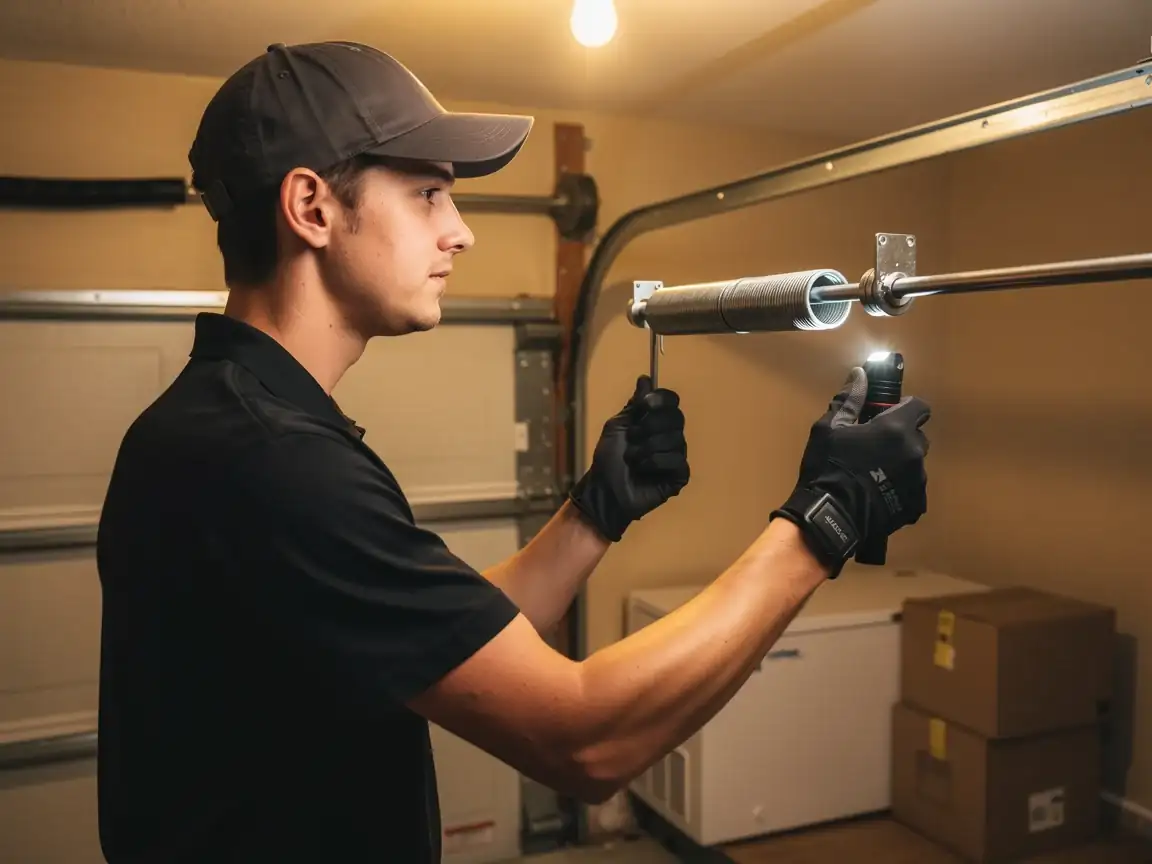
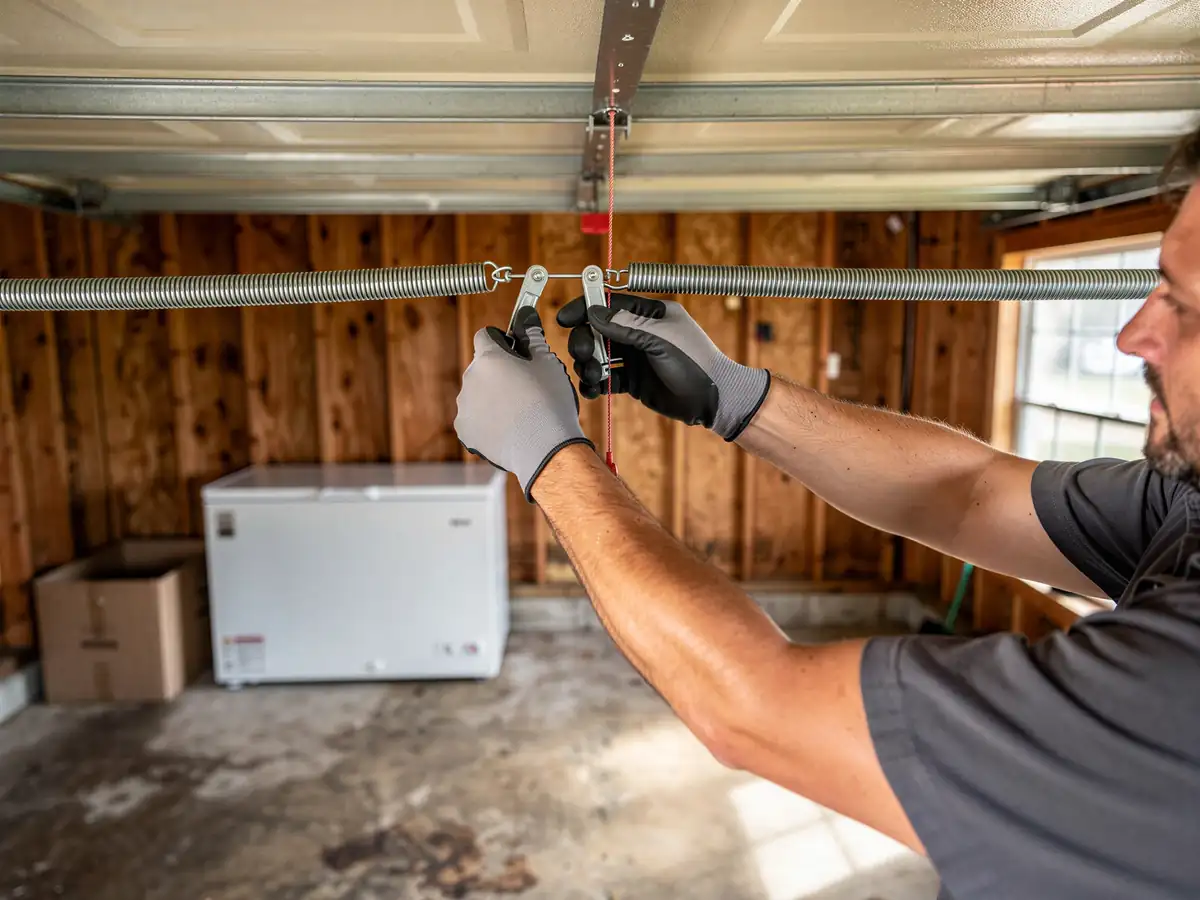
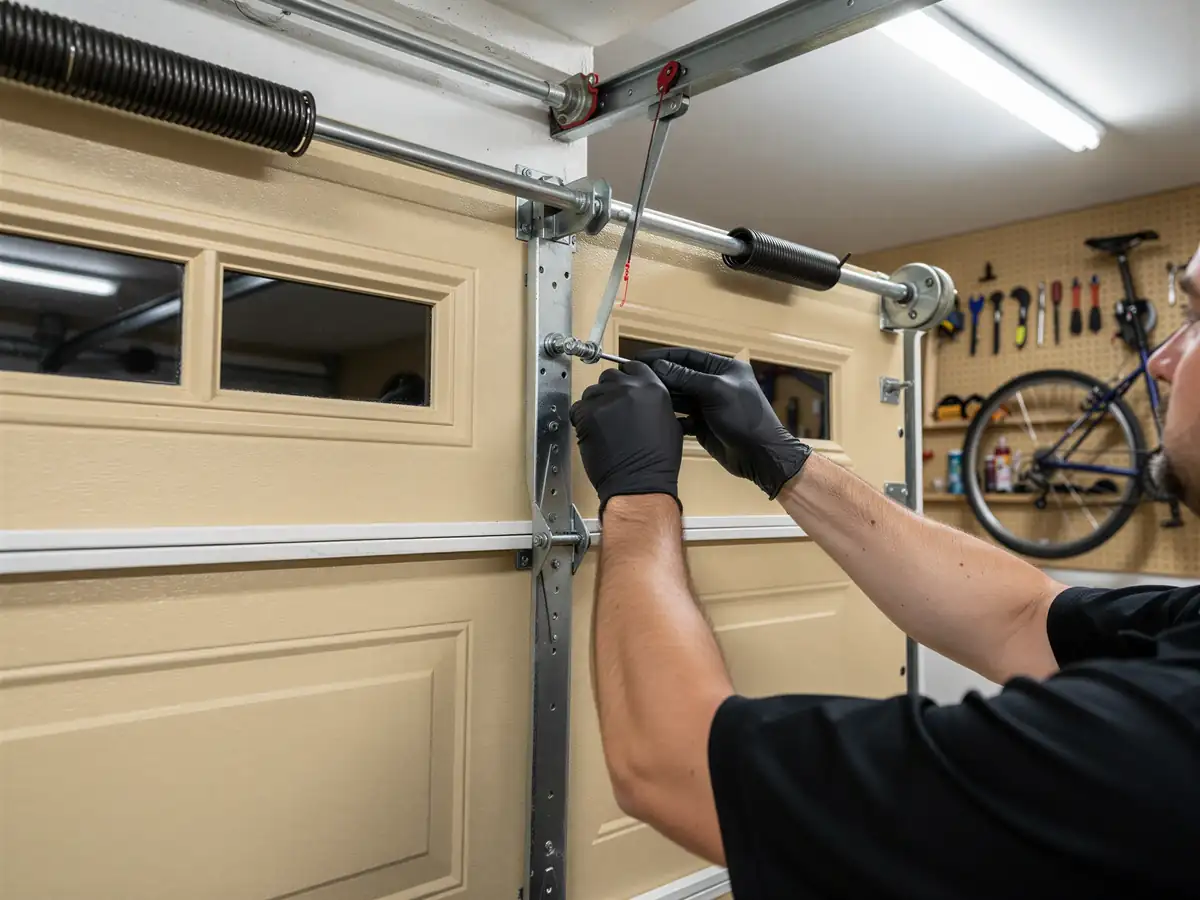
On a seasonal check, we're looking at spring tension, lubrication on rollers and hinges, and whether the weatherstripping at the bottom panel has stiffened up enough to let cold air in under the door. We check the balance by hand - a door that's heavy on one side or slow to reverse is telling you something about the spring or the cable before it fails outright.
We don't push a full tune-up on every visit. If the door is balanced, quiet, and the opener reverses properly on contact, we'll tell you that and leave it alone. A service call should find a problem, not invent one.
What You Pay
We don't post a flat number here because what a service call costs depends on what's actually wrong
A loose bracket is a different job than a broken torsion spring on a double door. What we can tell you is what's included in a standard visit: diagnosis, a safety check of cables, rollers, and the opener's reverse sensors, and a written explanation of what needs fixing now versus what can wait.
Median household income across the Cleveland service area runs about $64,756
And we keep that in mind when we're laying out options - repair versus replace, OEM part versus a compatible substitute. With 15,036 owner-occupied houses across the area, a lot of our calls are for doors original to homes built well before today's insulated steel panels were standard, so parts availability can affect the bill as much as labor does.
- 15,036 owner-occupied
The honest limitation
If your door or opener is old enough that parts are no longer stocked by any supplier we work with, repair stops being the cheaper option fast, and we'll say so rather than string along a patch job.
The Problem
Most houses in this service area went up between 1967 and 2004, with the median build year sitting around 1984. That's a 40-year span of doors, openers, and track hardware, and it means we're rarely looking at one standard setup. A door from the late 1960s has different mounting hardware than one installed in the late 1990s, and the opener - if it's original - almost always predates today's safety-reverse photo-eye sensors required on newer installs.
Across the twelve areas we cover, from East Cleveland two miles out to Sale Creek nineteen miles north, the bulk of the housing stock is 1980s and 90s construction. That generation of garage doors tends to run single-layer steel panels without much insulation, light-gauge tracks, and springs sized for a lighter door than what often gets swapped in during a later remodel - the kind of mismatch that causes premature spring wear.
The problem we run into most isn't the door itself failing outright - it's a repair done once, years back, with a part that didn't match the original spec, finally catching up with the system.
How Local Conditions Play In
The cold-moderate climate here doesn't bring the extreme freeze-thaw cycling of a harsher northern winter, but it's enough to stress metal fatigue in springs and cables that are already decades old given the 1967-2004 build window. A spring rated for a certain number of cycles doesn't care what year it is - it cares how many times it's been wound and released, and homes near the 1984 median have had a long run of that.
With 26,126 households in the service area and 15,036 of those owner-occupied, we're dealing with a wide range of maintenance histories. Some doors have been serviced every couple of years, some haven't been touched since they were installed. Neither extreme is unusual here, and both show up in different ways - over-tightened springs from an amateur adjustment, or rollers that have gone dry for so long the track shows wear grooves.
We don't treat every call the same because the housing stock here isn't uniform. A door on a 1970s build and a door on a 2000s build fail differently, and the fix should match the house, not a script.