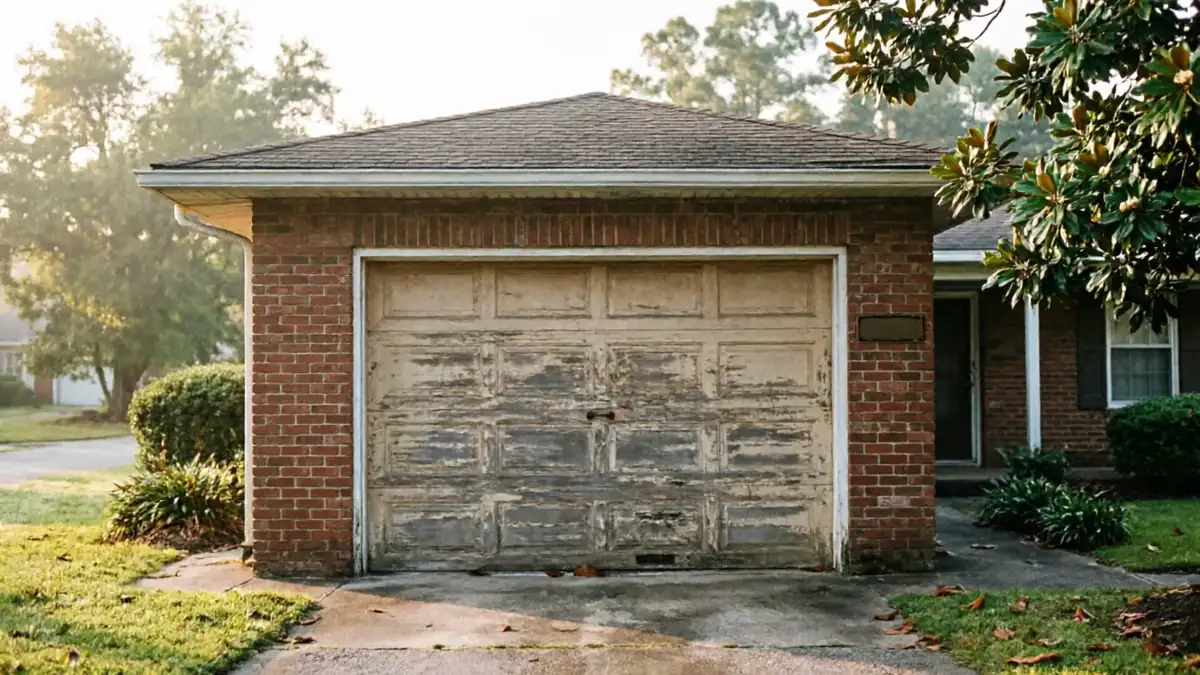
The Seasonal Bit
Cleveland sits in a cold-moderate climate band, which means the door doesn't just sit there looking at you - it works through real temperature swings every winter. Steel panels contract in the cold, and on a door that's already decades old, that contraction finds every weak spot: a track that's a hair out of plumb, a roller that's worn oval instead of round, hinges with play in them. None of that shows up much in July. It shows up the first hard cold snap, usually as a door that binds halfway up or an opener that strains and reverses.
If your door is original to a house built anywhere in that 1967 to 2004 range that covers most of this area, the cold is doing you a favor by telling you early. A door that struggles in January but runs fine the rest of the year is usually a lubrication and adjustment job, not a replacement. A door that's been fighting you since before the cold even set in is a different conversation - the cold just made it obvious sooner.
What You Pay
We don't post a flat number here because what a repair costs depends on what's actually wrong and what's still available for that door
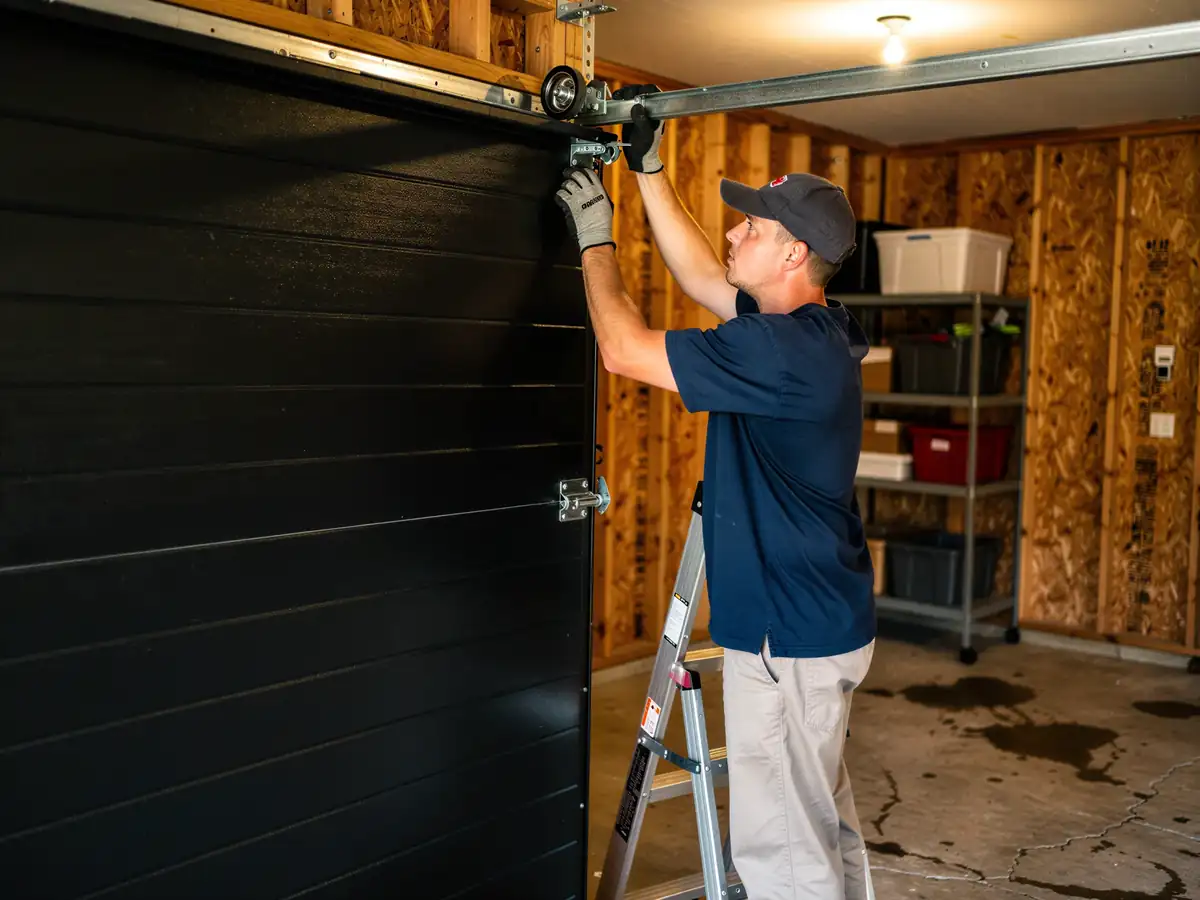
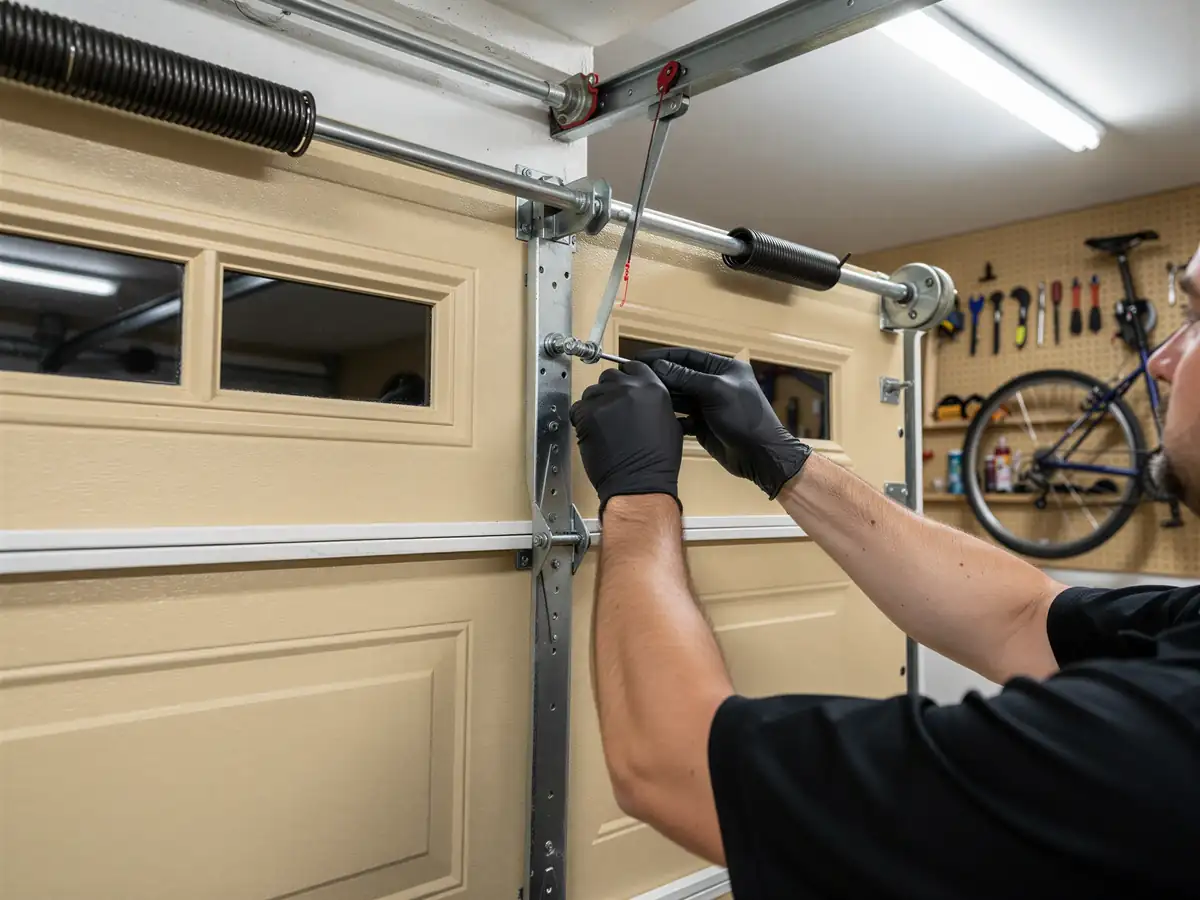
On a lot of the housing stock in this area - built mostly through the 1980s and 90s - the original hardware is long out of production. A torsion spring or a standard roller is an easy swap on almost anything. A full replacement track system or a panel match on a door from that era can mean special-ordering a part that nobody keeps on the truck, which adds time, not just cost.
The honest limitation
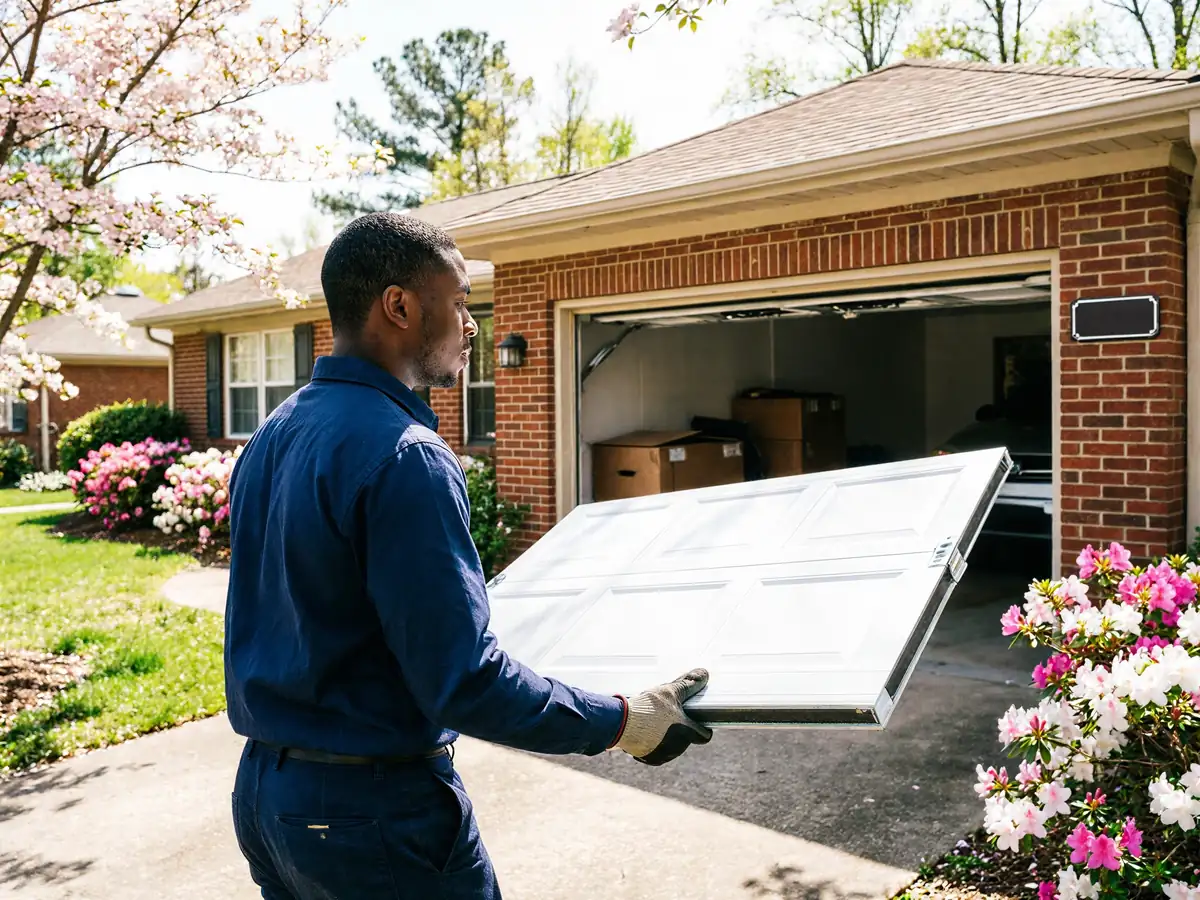
If your door needs a panel we have to order and the spring and the opener are also showing their age, we'll tell you straight that putting more money into that door is throwing good money after bad. We'd rather say that up front than have you pay for three separate repairs over two years on a door that was due for replacement at the first one.
The Problem
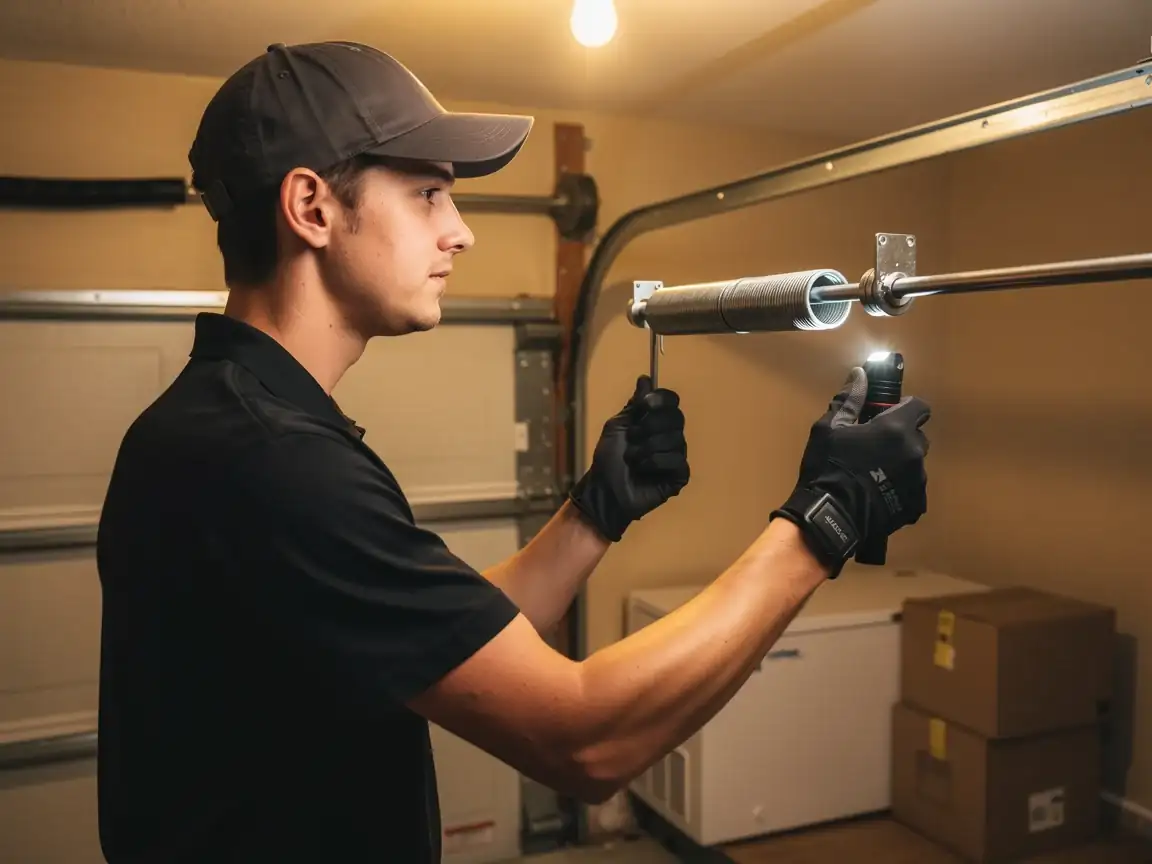
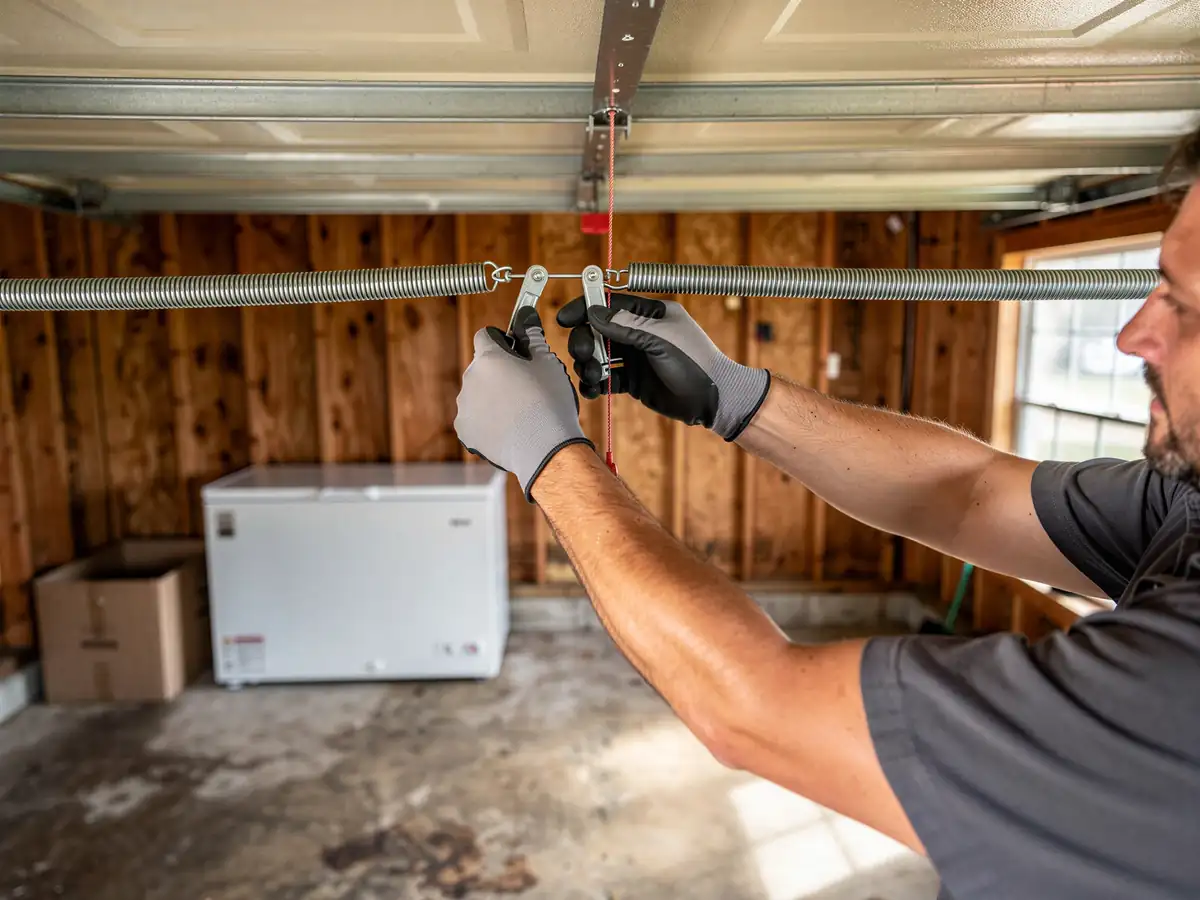
The real issue with older doors here isn't that they break - it's that they get patched instead of fixed properly, because a quick fix always looks cheaper in the moment. A worn roller gets ignored until it takes the track with it. A spring that's clearly tired gets left alone because the door still opens, until it snaps on a cold morning and takes a cable with it too.
With a median household income of $64,756 across the communities we work in, most owners are weighing a repair bill against a replacement bill carefully, which is fair. The mistake is waiting until the failure is total before doing that math. A door built around the 1984 median for this area is pushing forty years old on its hardware even if the panels still look fine - and hardware, not steel, is almost always what fails first.
How Local Conditions Play In
Across the twelve communities we cover - from East Cleveland two miles out to Sale Creek nineteen miles north, with Hopewell, South Cleveland, Wildwood Lake, Benton, Ooltewah, Collegedale, Lakesite, Harrison, Soddy-Daisy, and Middle Valley in between - the housing age runs fairly consistent, mostly 1980s and 90s construction. That matters for one practical reason: openers and torsion hardware from that era were built to a different standard than what's sold today, and matching parts gets harder every year.
The cold-moderate climate doesn't cause dramatic failures, but it's steady pressure on anything already worn. A door that's marginal in September is often the one that won't open in a January freeze. If your house falls in that main construction window, it's worth having the door and opener looked at before the cold decides for you, rather than after.