Why It Happens Here
Collegedale's median household income runs $64,905, a touch above the $64,756 median across the wider service area we cover from Cleveland. That number matters for one reason: at this income level, a single damaged panel on a steel sectional door almost always sits below the line where replacing the whole door makes financial sense. You're paying to match and swap one section, not re-equip the opening.
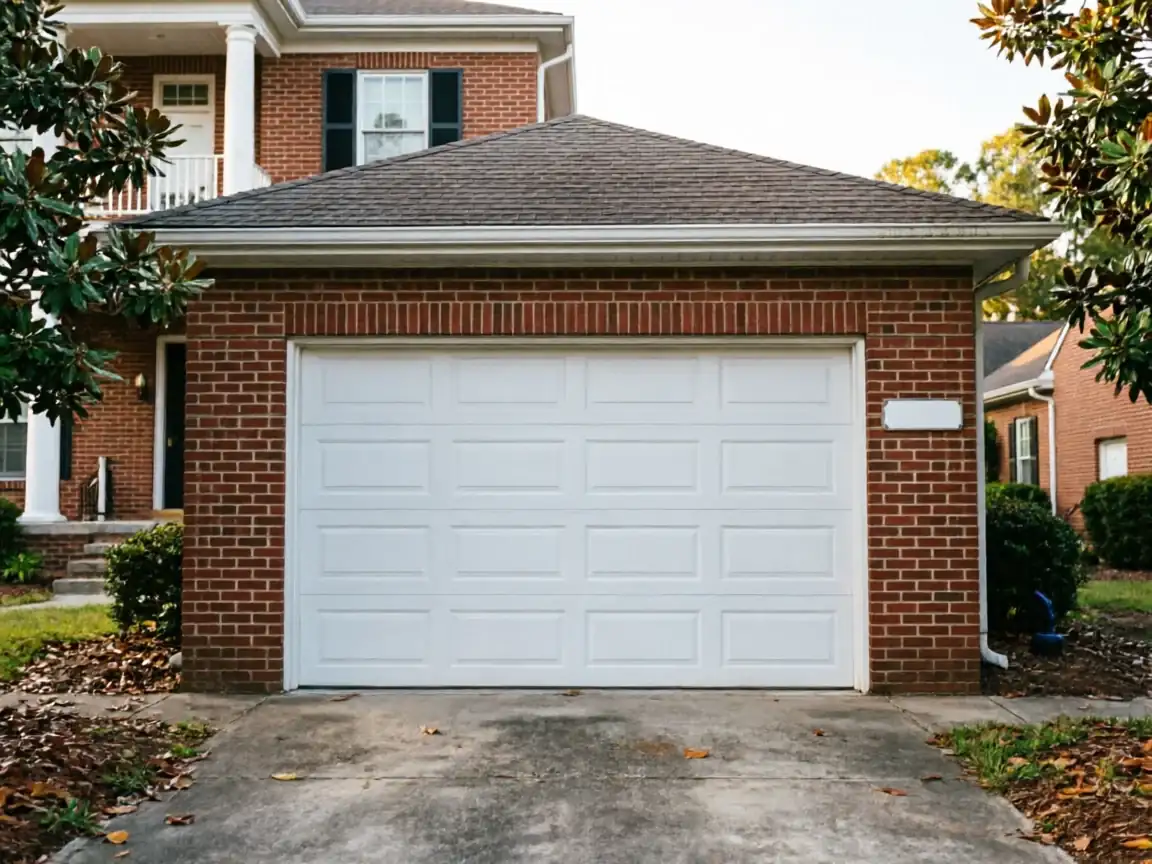
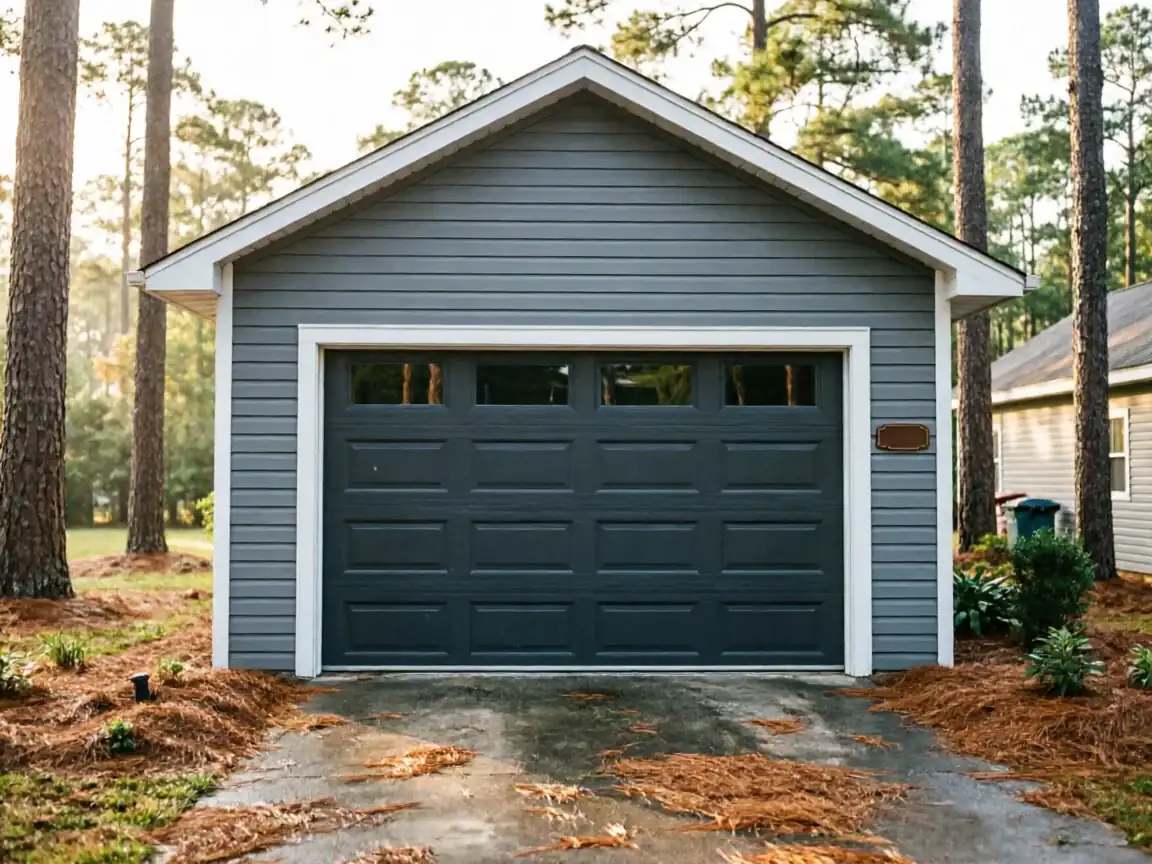
The housing here backs that up. While houses across the broader Cleveland area span 1967 to 2004 with a median build year of 1984, Collegedale's own stock centers much closer to 2004 itself. That means most doors here are factory steel sectional units with foam-filled panels, not the older wood or hollow aluminum doors you'd find on a 1960s build. The failure mode is different too: dents and cracked skins from impact, not rot or warping from age.
We don't guess at this. A door built around 2004 uses panel profiles and hinge spacing that are still in production or recently discontinued, which changes what we stock and what we have to special-order.
What You Are Seeing
On a steel sectional door from the early 2000s, panel damage usually shows up as one of three things
A crease or dent from a car bumper or a thrown object, a cracked outer skin where the foam core has separated from the steel face, or fade and chalking on the sun-facing side that makes one panel look a different shade than the rest of the door.
Because these doors are only about two decades old
Structural rust is rare unless a sprinkler or downspout has been soaking the bottom panel for years. What we do see more often is a single bottom panel taking the brunt of the damage - it's the one at bumper height, the one that gets backed into, the one a lawnmower clips.
If the damage is isolated to one or two panels and the track and rollers are still true
A panel swap is usually the right call. If the door has racked out of square from a hard hit, that's a different job, and we'll tell you so before we order parts.
Stocked Parts
For doors built in the window common to Collegedale homes, we carry standard steel sectional panel sizes in the widths and heights that match typical single and double garage openings from that era. Colors and embossing patterns from the early 2000s are more likely to still be in production than ones from the 1980s, which works in your favor here compared to older housing stock elsewhere in the area we serve.
We do not stock every panel profile on the truck. Insulated panels with a specific foam-fill thickness, or a door from a builder-grade line that's been through a color change since install, often need a lead time while we source the exact match. That's the honest limitation: if your door's manufacturer discontinued that panel run, we can get close on color and profile, but we won't promise an invisible match sight unseen.
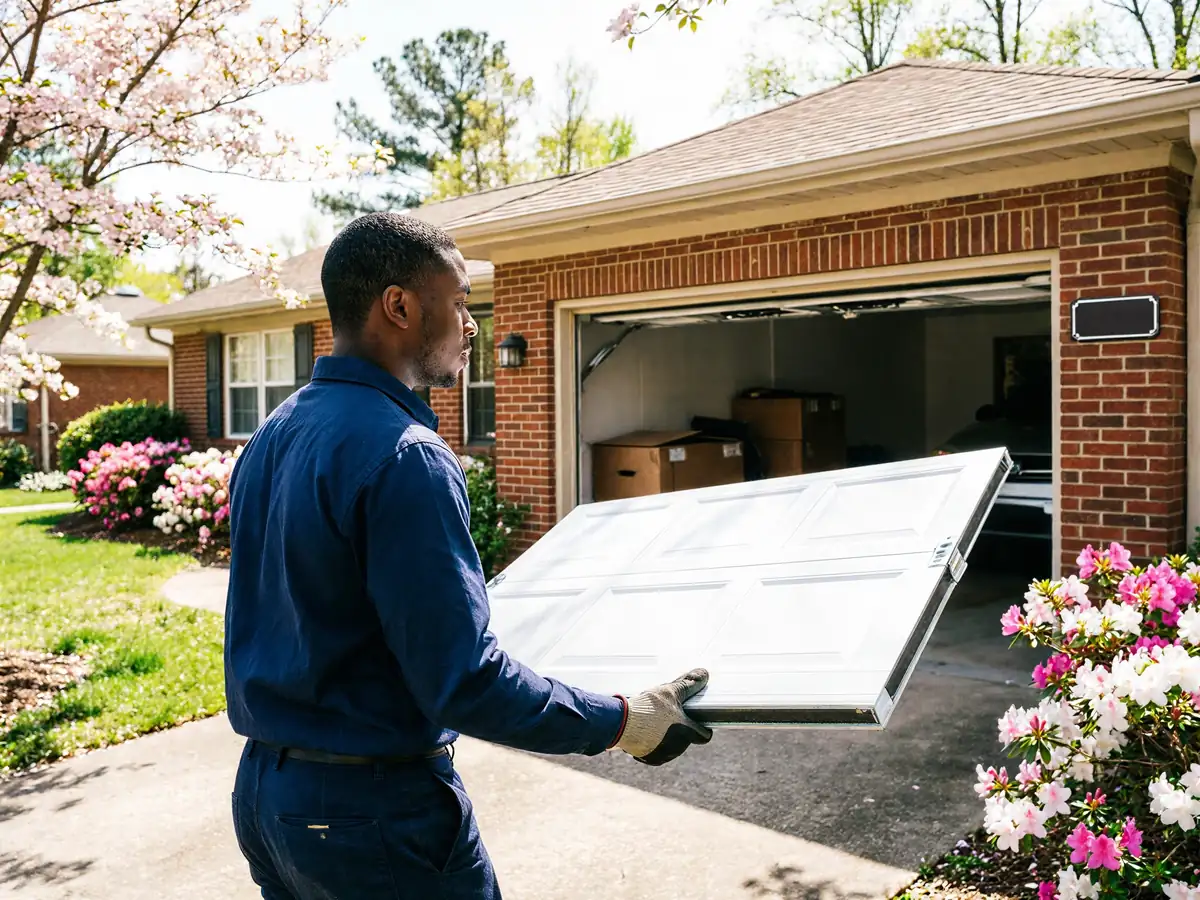
We'll pull the panel, check the backing label for model and size, and order against that rather than guessing from a photo.
How Long It Takes
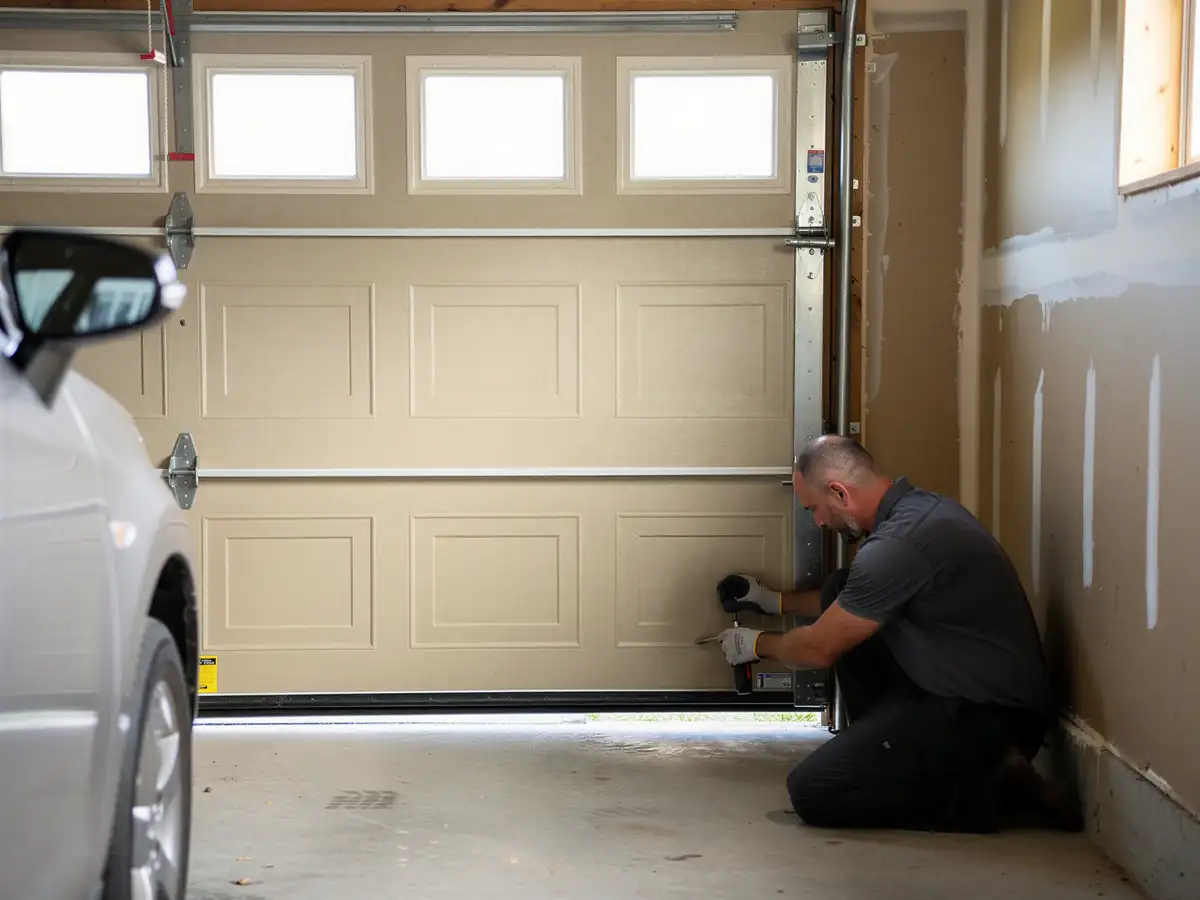
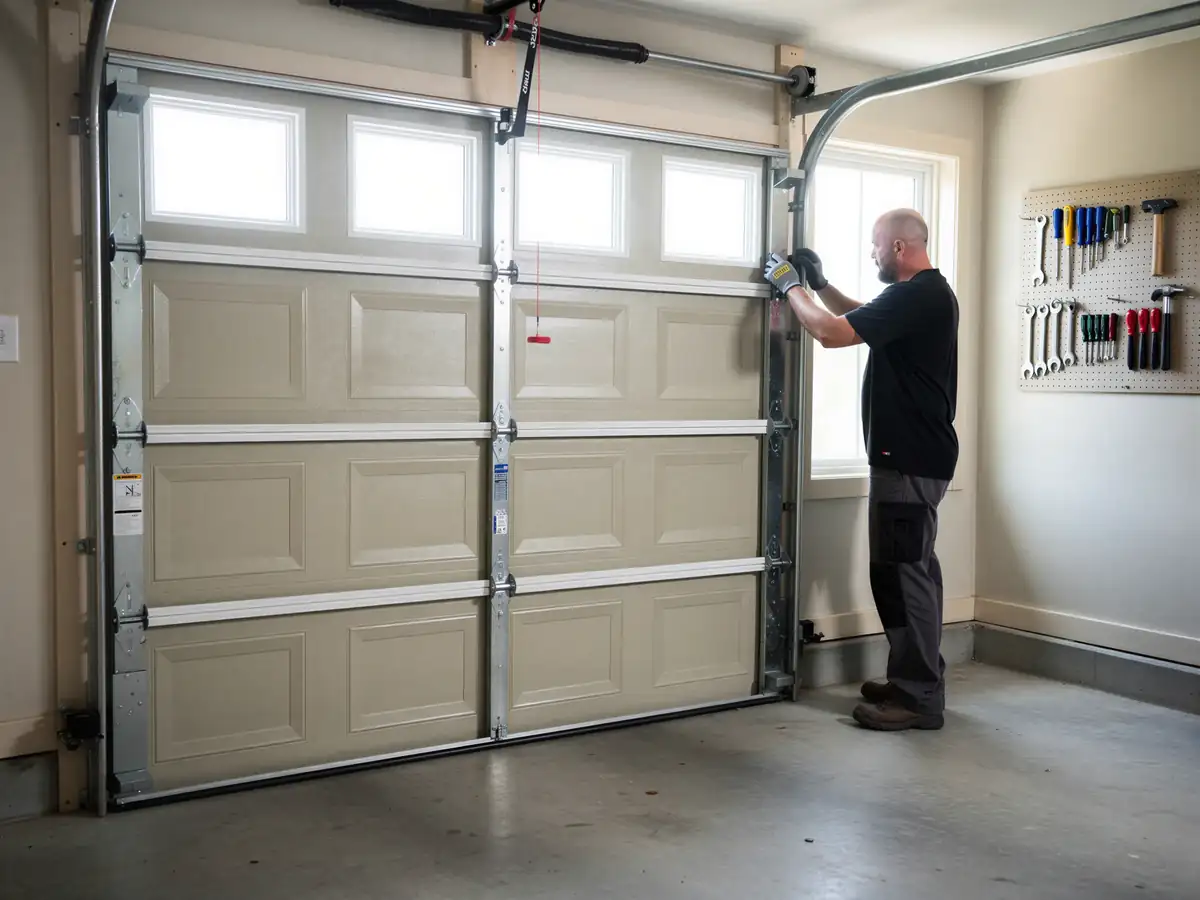
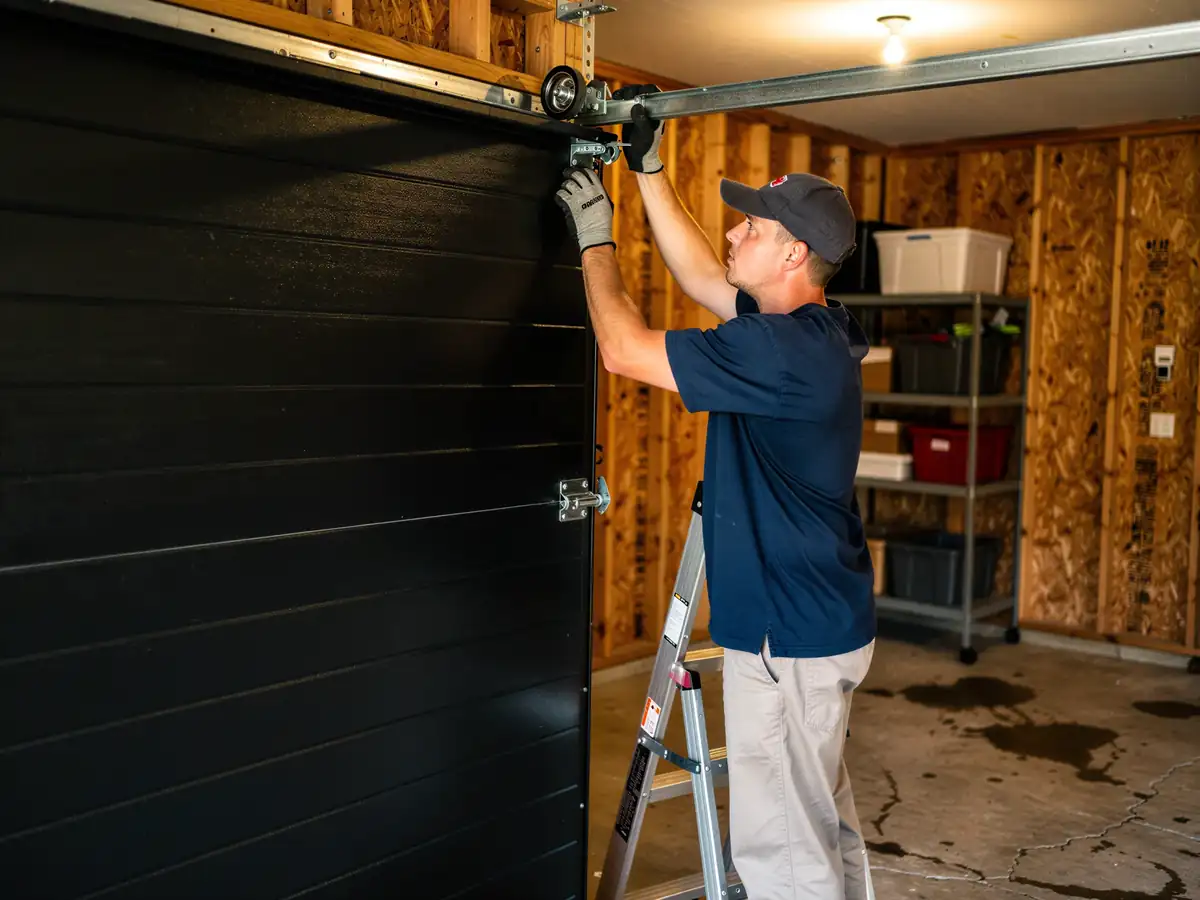
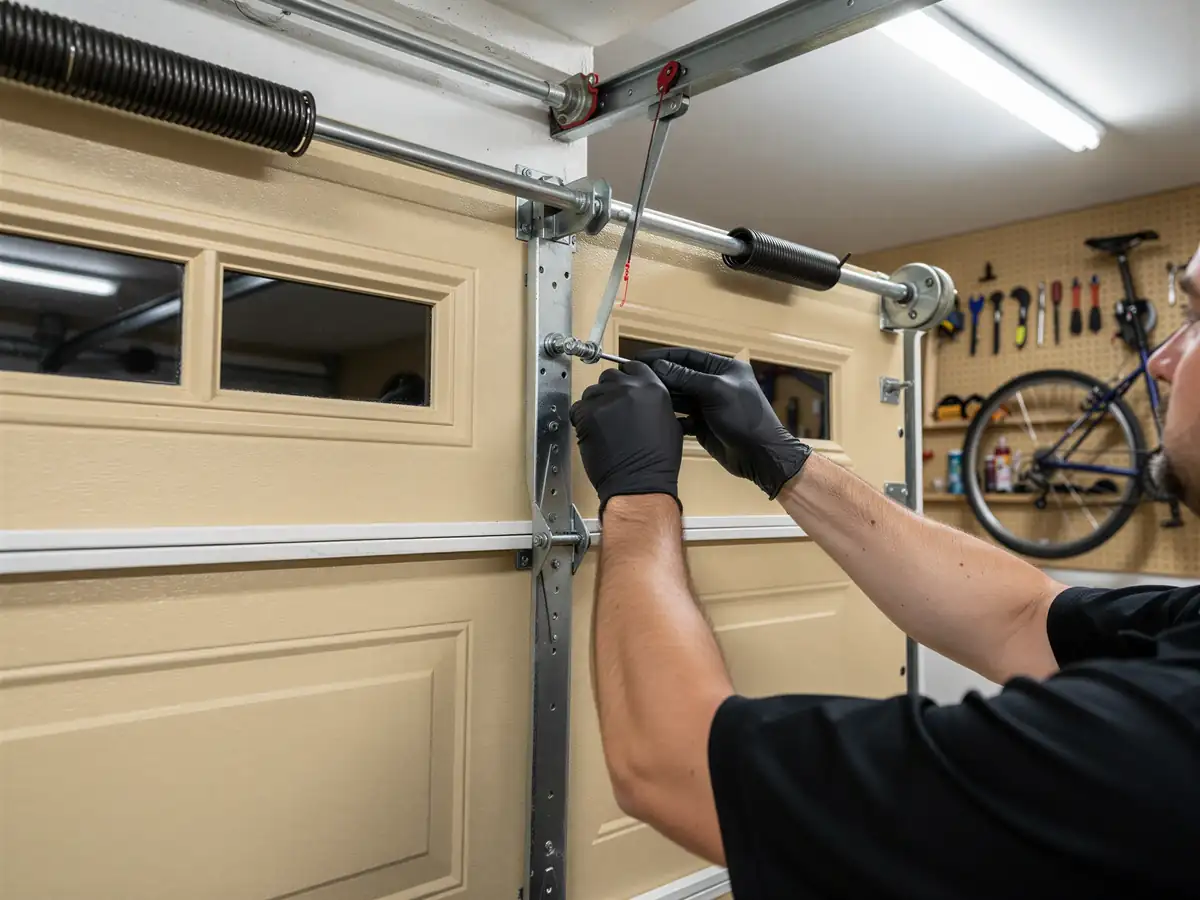
There's no branch in Collegedale - we run the job from Cleveland, about 13 miles out. For a straightforward single-panel swap where we already stock the match, that's one visit: pull the damaged panel, fit the replacement, check the hinges and roller brackets for stress cracks, and reset the door on the track.
When the panel has to be special-ordered, the visit splits into two: one to confirm the exact model and take measurements, a second once the part arrives to install it. We won't quote a turnaround on the ordered part here since that depends on the manufacturer, not on us.
Either way, the door stays out of service between the panels being damaged and the fix going in, so if it's the only panel keeping the door sealed against the cold, we'll talk through whether a temporary fix makes sense while the real part is in transit.
The Complications
Collegedale sits in the same cold-moderate climate band as the rest of the area we cover
Which means foam-filled panels are the standard spec here, not an upgrade. A damaged panel on a door like that isn't just cosmetic - a cracked skin lets the fill degrade and the seal at that joint go soft, which shows up as drafts and higher heating bills before it shows up as anything you can see.
The other complication is matching
A door built close to 2004 is young enough that exact panel matches are often available, but builder-grade doors sold through a single developer sometimes used a color or texture run that's no longer made. In that case we can get a close match, but we tell you up front rather than installing something that'll look off and calling it done.
We also won't push a panel swap on a door that's structurally racked from impact
At that point the frame, not the panel, is the problem, and replacing one piece of skin won't fix it.