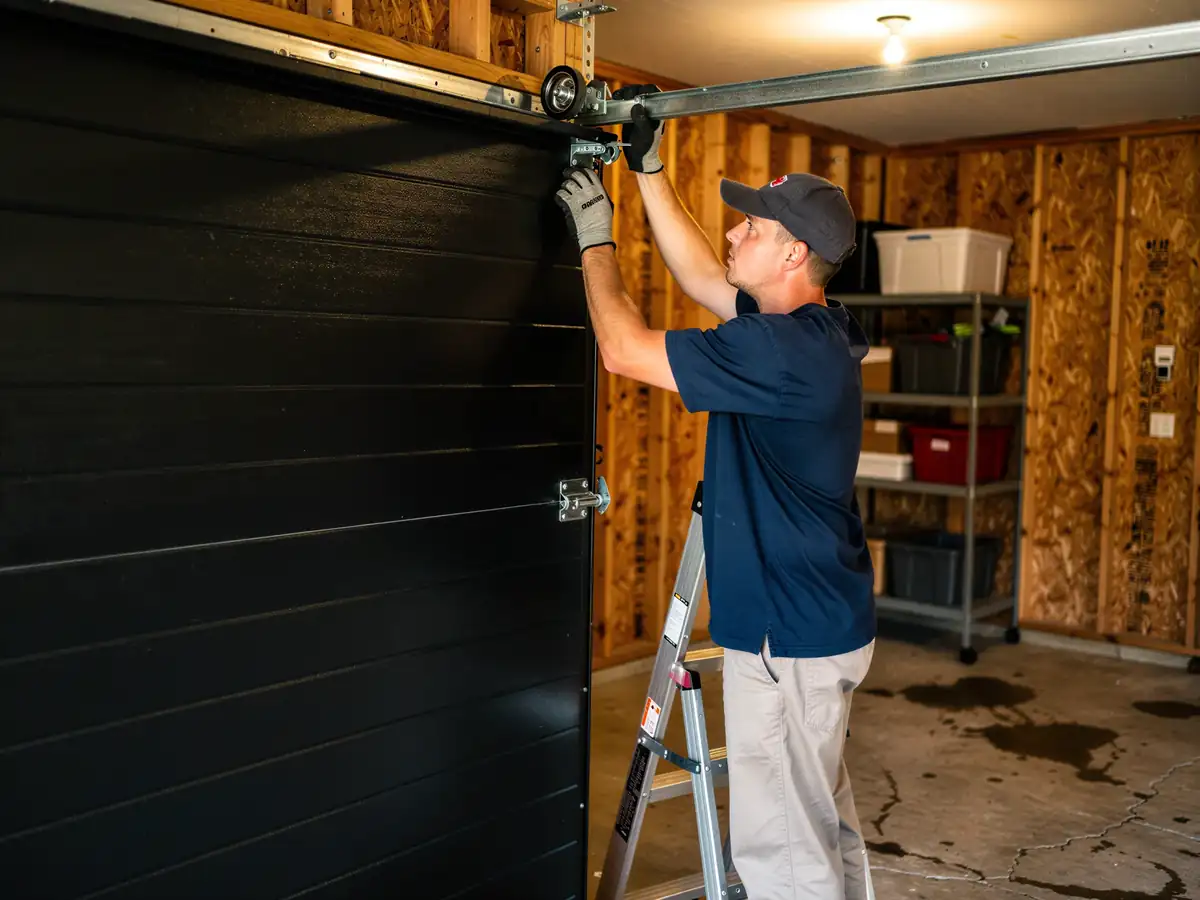
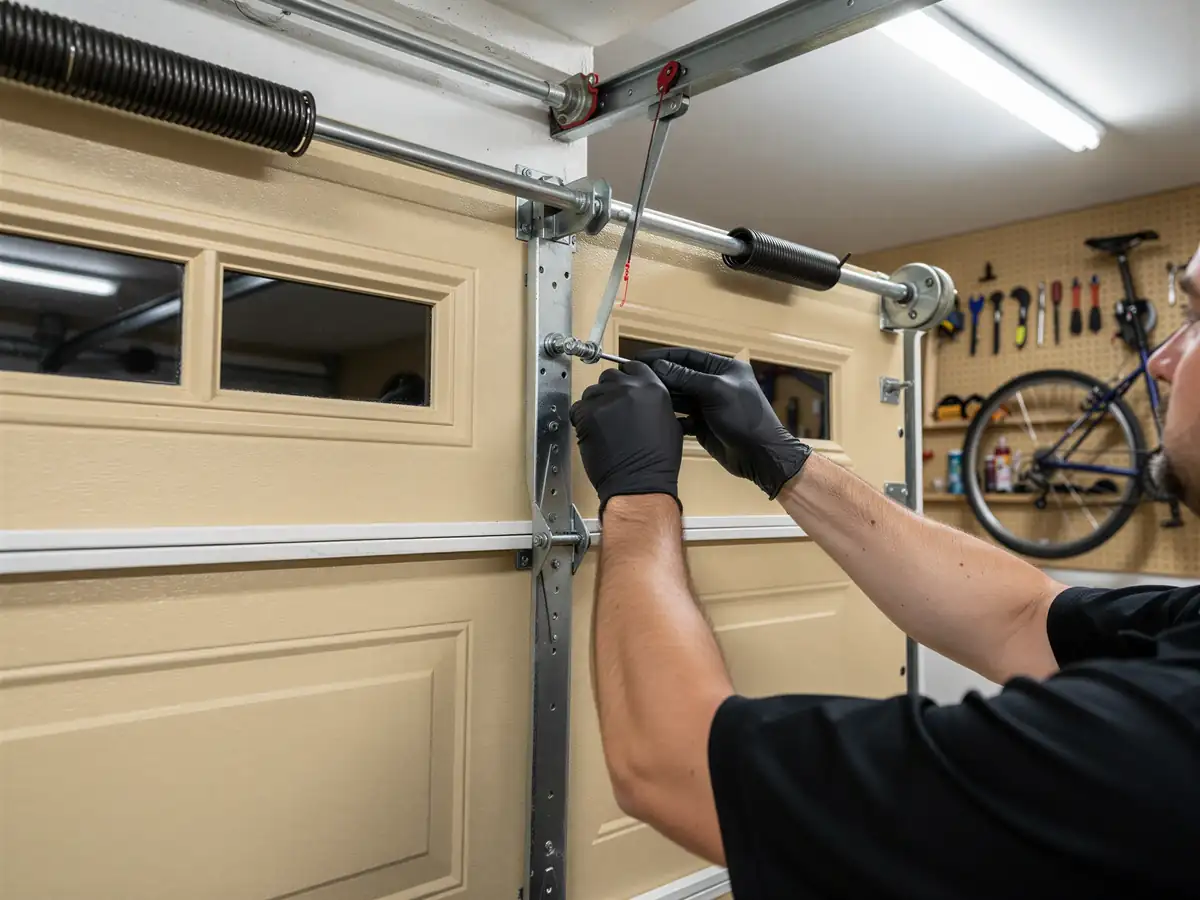
Why It Happens Here
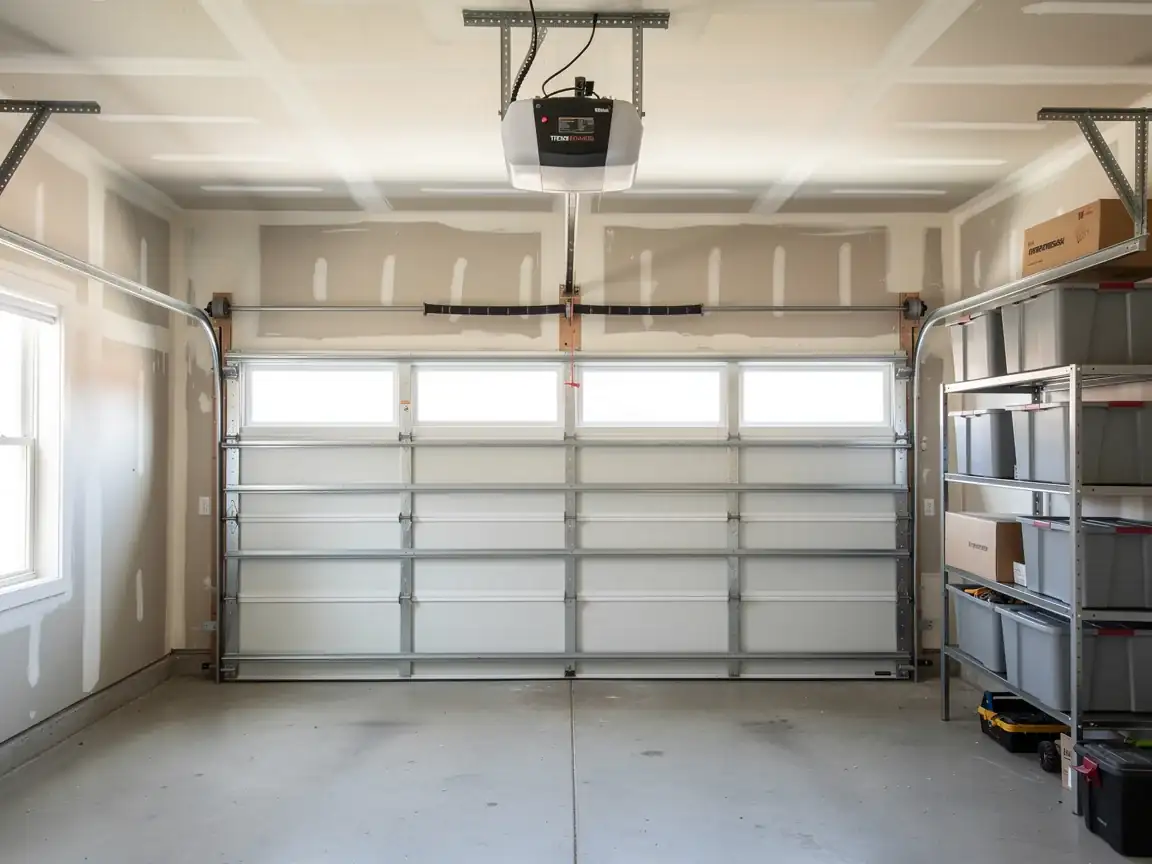
South Cleveland's garage doors don't share the same story as the newer edges of the service area. Housing stock across the wider territory runs from 1967 up through 2004, with a median year of 1984, and South Cleveland sits almost exactly on that median, rather than trending toward the newer end like some of the other twelve areas we cover. That means the openers and torsion springs behind a lot of these doors are original-era hardware: steel sectional doors on extension or early torsion setups, chain-drive openers from before belt-drive was standard.
The region sits in a cold-moderate climate band, and freeze-thaw cycling plus ordinary temperature swings are what actually wear out lubrication and metal on springs and rollers that have been doing the same job for decades. None of that is dramatic - no named storm, no flood event - it's slow mechanical wear on hardware built to a 1980s spec that's had forty-some winters to loosen bolts and dry out grease. A door that's never been serviced since it went up in 1984 doesn't fail because something extraordinary happened. It fails because the galvanizing on that era's track hardware wears thinner every winter and nobody's re-torqued the lag screws.
How Long It Takes
A maintenance visit on a door this age runs longer than on a 2004-build door in the same service area
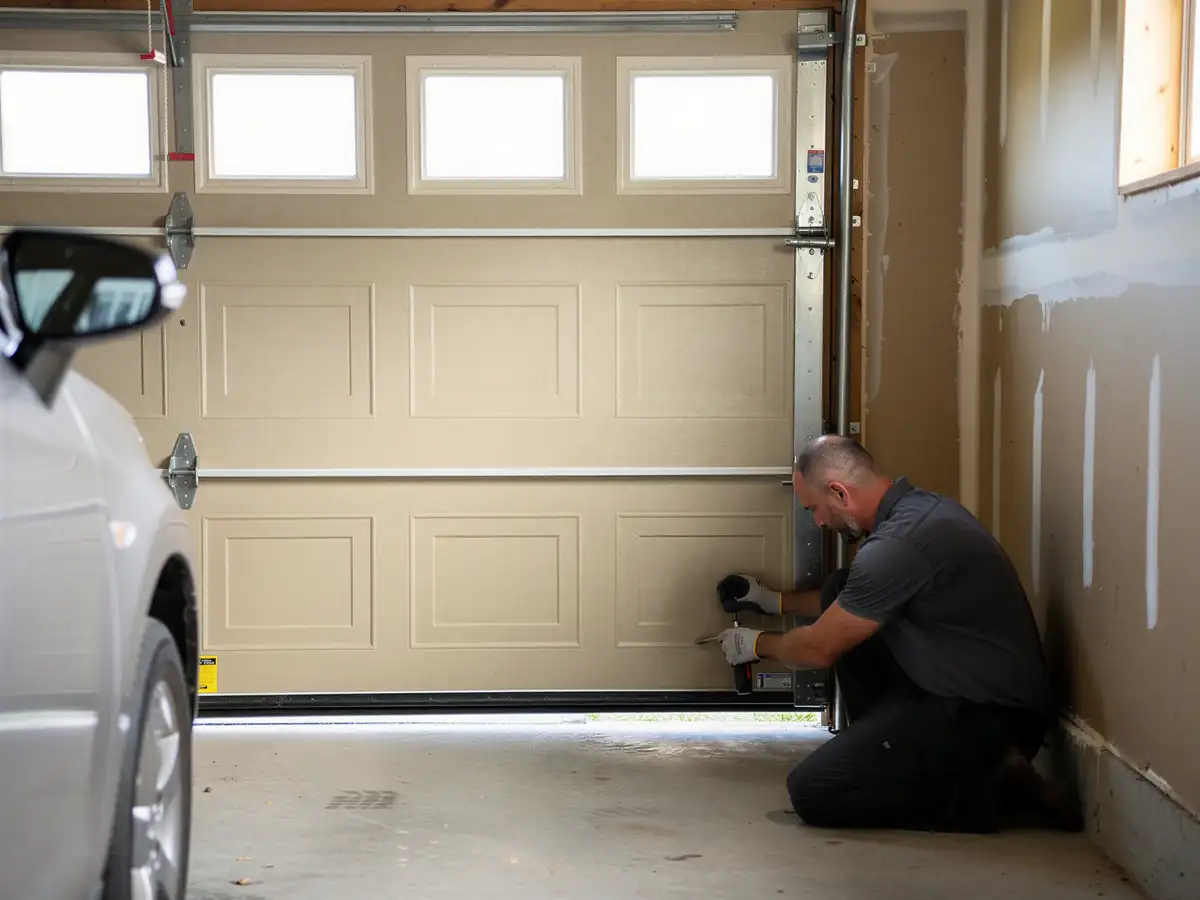
Simply because there's more to check. Original hardware from the mid-1980s often has mismatched parts from past partial repairs - a roller swapped here, a cable replaced there - and each of those gets inspected individually rather than assumed fine because the rest of the door looks sound.
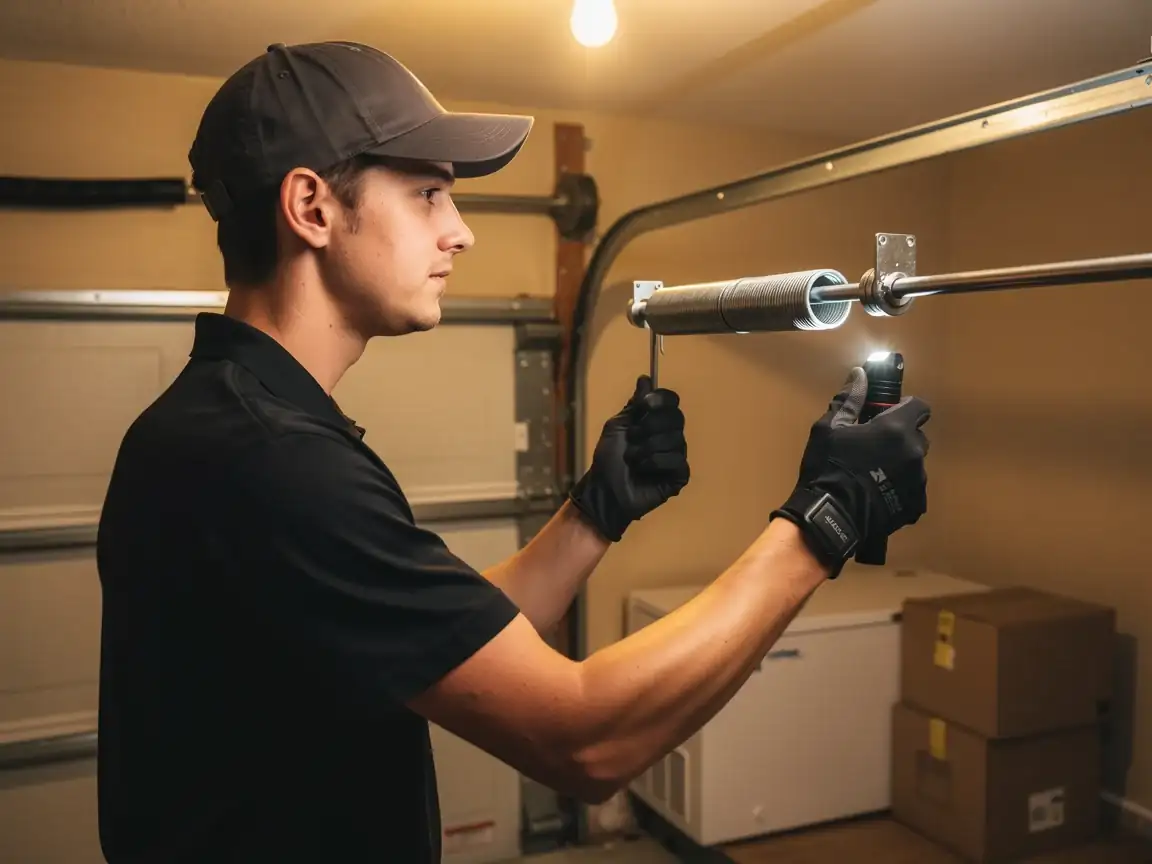
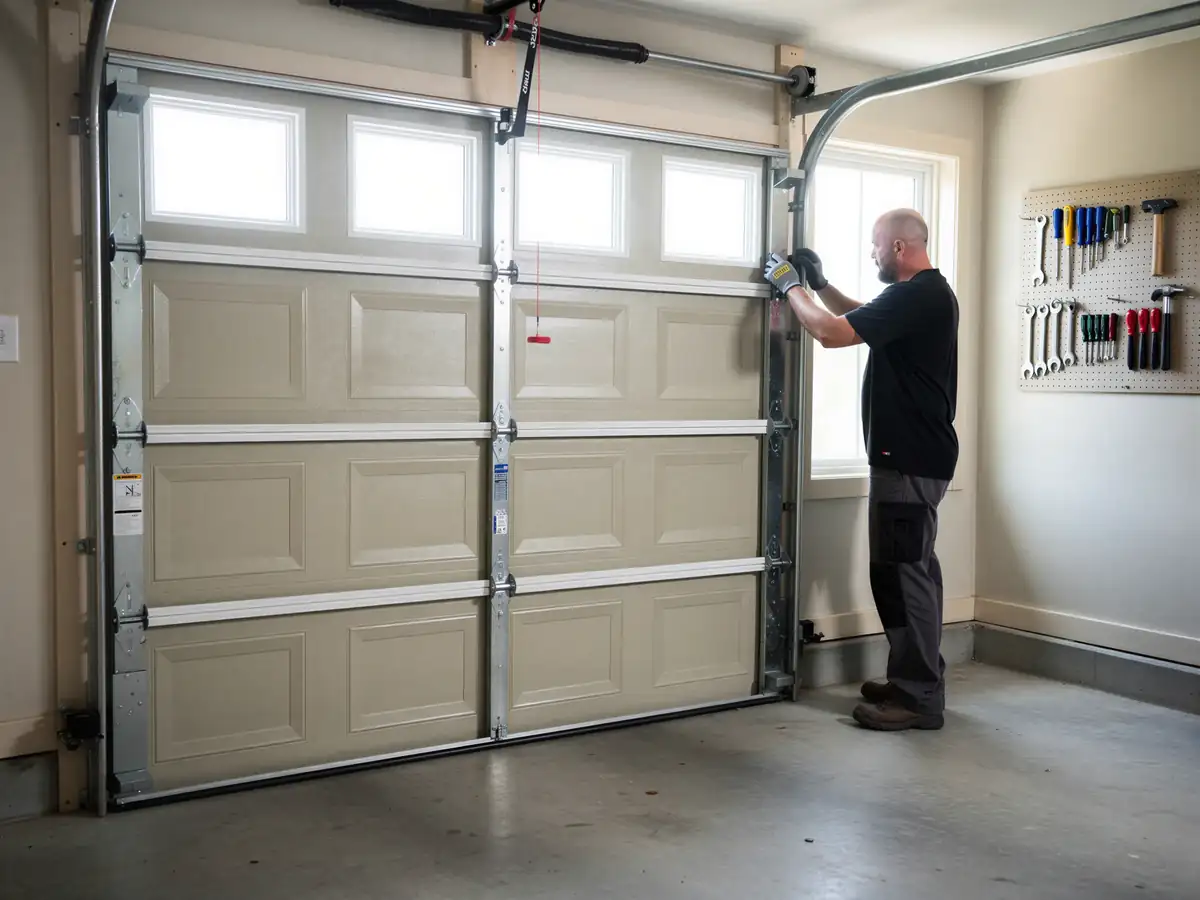
The bulk of the time goes to the spring system and the track alignment, not the opener
Openers from this era are simpler mechanically and either work or don't; springs are the part that degrade gradually and need a trained eye to catch before they snap. We won't quote a fixed number of minutes here because it genuinely depends on what the last service visit looked like, if there was one. A door that's been ignored since 1984 takes longer than one that's had even one prior tune-up.
What we won't do is rush a torsion spring inspection on hardware this old just to hit a time target
If something looks fatigued, it gets flagged, even if that means the visit runs past what a newer door would take.
Can You Do This Yourself
Some of this is fine to handle without calling anyone. Wipe down and lubricate the rollers and hinges twice a year, check that the photo-eye sensors are clean and aligned, and test the auto-reverse by setting a block of wood in the door's path and running it down. Those are low-risk, low-skill jobs regardless of how old the door is.
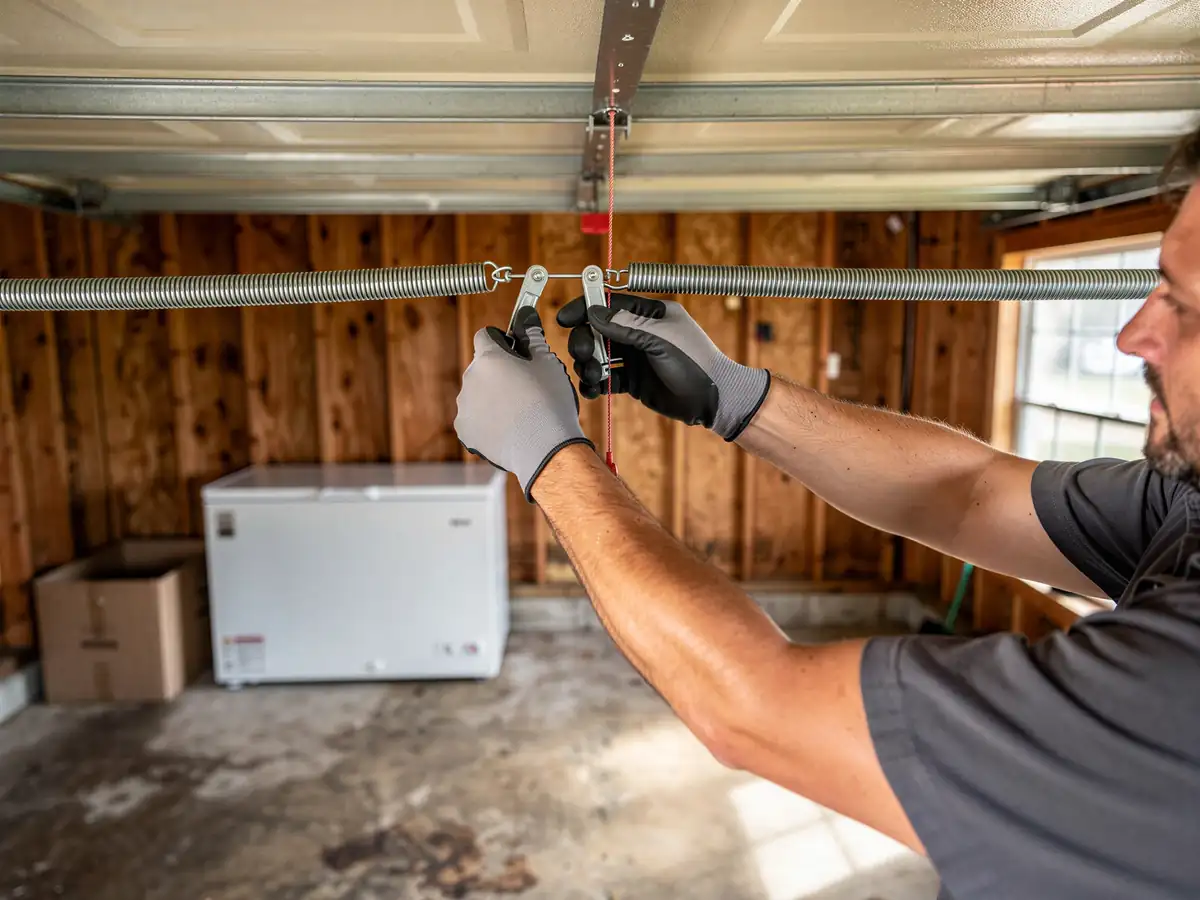
What we don't recommend doing yourself here is anything involving the torsion spring - not because South Cleveland is special, but because a spring system installed around 1984 has had decades to lose tension unevenly, and a spring that looks fine under load can let go with real force when you unwind it. That's a job for someone who does it daily, with the right winding bars and a clamp.
Honest limitation: if a door's track, springs, and opener are all original from the 1980s and showing wear together, a maintenance visit can only do so much. At some point patching 40-year-old hardware costs more over a few years than replacing the parts that keep failing, and we'll tell you that instead of running another service call on it.
Getting It Booked In
The crew works out of Cleveland, five miles down the road, and covers South Cleveland as a standard stop on that route rather than a special trip. There's no separate branch or depot here - it's the same team and the same trucks that handle the rest of the service area, just routed out to this side of town.
If you're not sure whether your door needs a full repair or a maintenance visit, the South Cleveland area page has more on what we cover in this pocket specifically. For the fuller rundown of every service we run out of Cleveland, including installs and emergency repair, that's covered on the Cleveland maintenance page rather than repeated here.
What You Pay
We don't have a fixed price to quote on this page, and we'd rather say that than make one up
What drives the cost on a South Cleveland job is mostly the age and condition of what's already on the door - a 1984-era torsion system that just needs lubrication and a balance check costs a lot less than one where the spring itself has lost tension and needs replacing, or where rollers have worn grooves into the track.
Parts availability matters too
Original hardware from this era isn't always something we carry on the truck, since it's not what gets installed new anymore. If a part needs ordering, that adds to the visit rather than the base maintenance cost. We'll always tell you what we're seeing and what it'll take before any work starts, rather than quoting a number sight unseen.
What You Are Seeing
On doors this age, the pattern is pretty consistent: a door that closes slower on one side than the other, usually meaning uneven spring tension rather than a bent track. A grinding or popping sound partway through the cycle, which is often a roller that's worn its bearing out after years without lubrication. Panels that have started to sag slightly at the bottom corners, which shows up as daylight gaps when the door's fully closed.
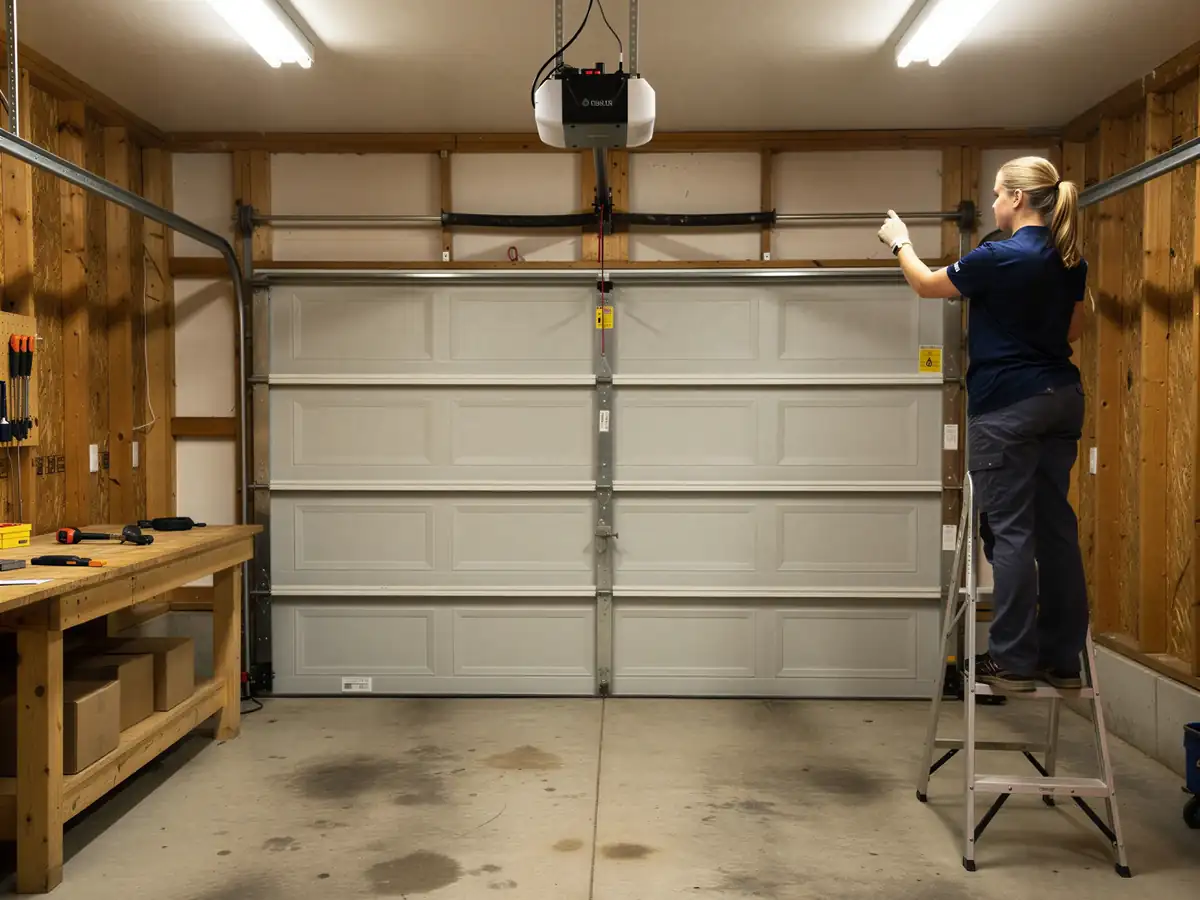
Openers from the 1984-median building period are usually chain-drive units, and those tend to announce wear loudly - a chain that's slapped against its rail for years sounds different from one that's been adjusted properly. If your opener has started making a new noise in the last few months, that's usually the chain tension or the drive gear, not the motor itself.
None of these are emergencies by themselves. They're signs that the hardware installed when the house was built is reaching the point where lubrication and adjustment stop being enough, and something's going to need replacing within the next service cycle or two.