Why It Happens Here
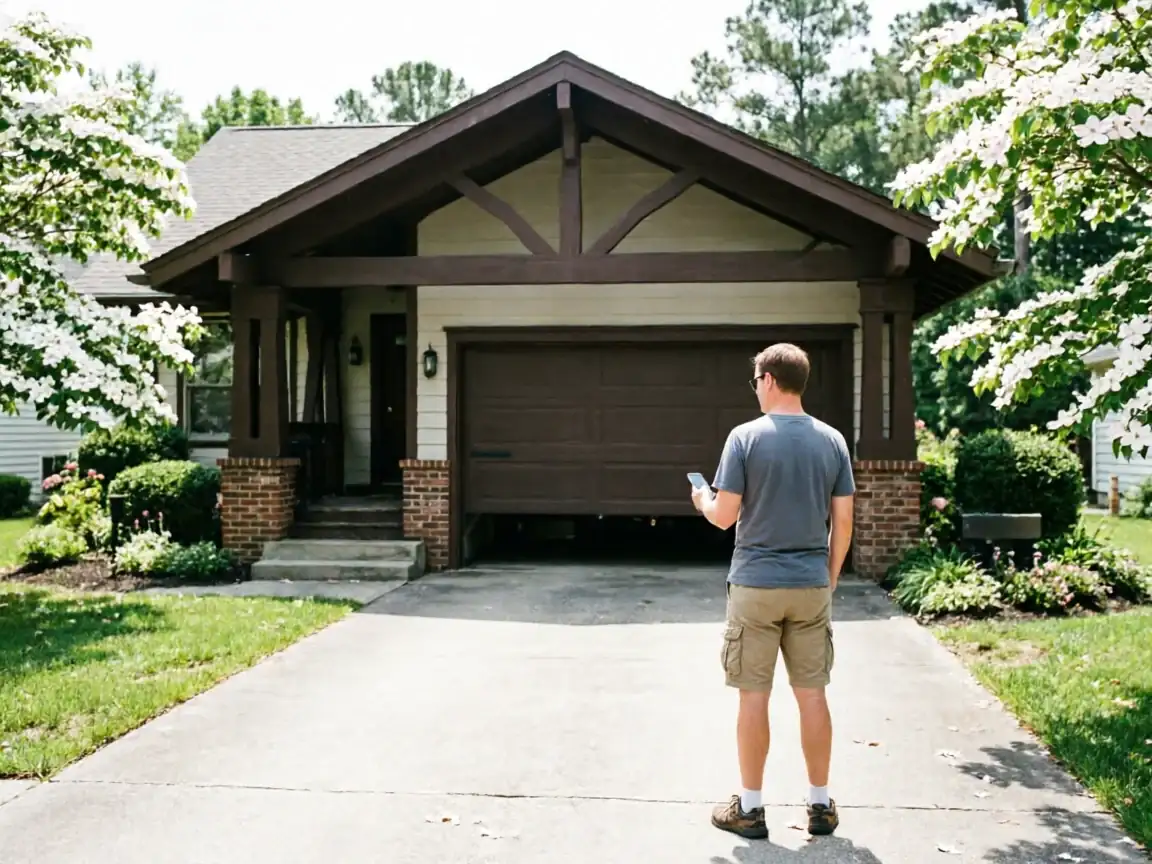
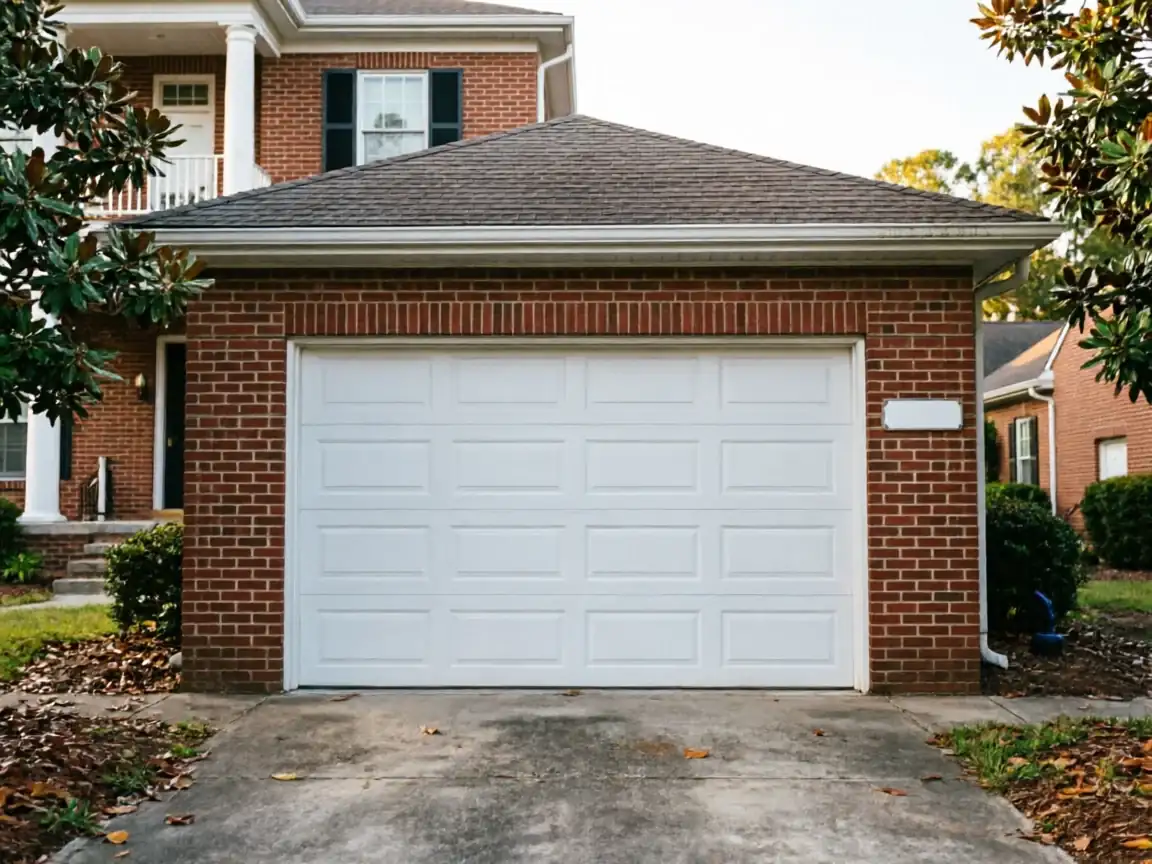
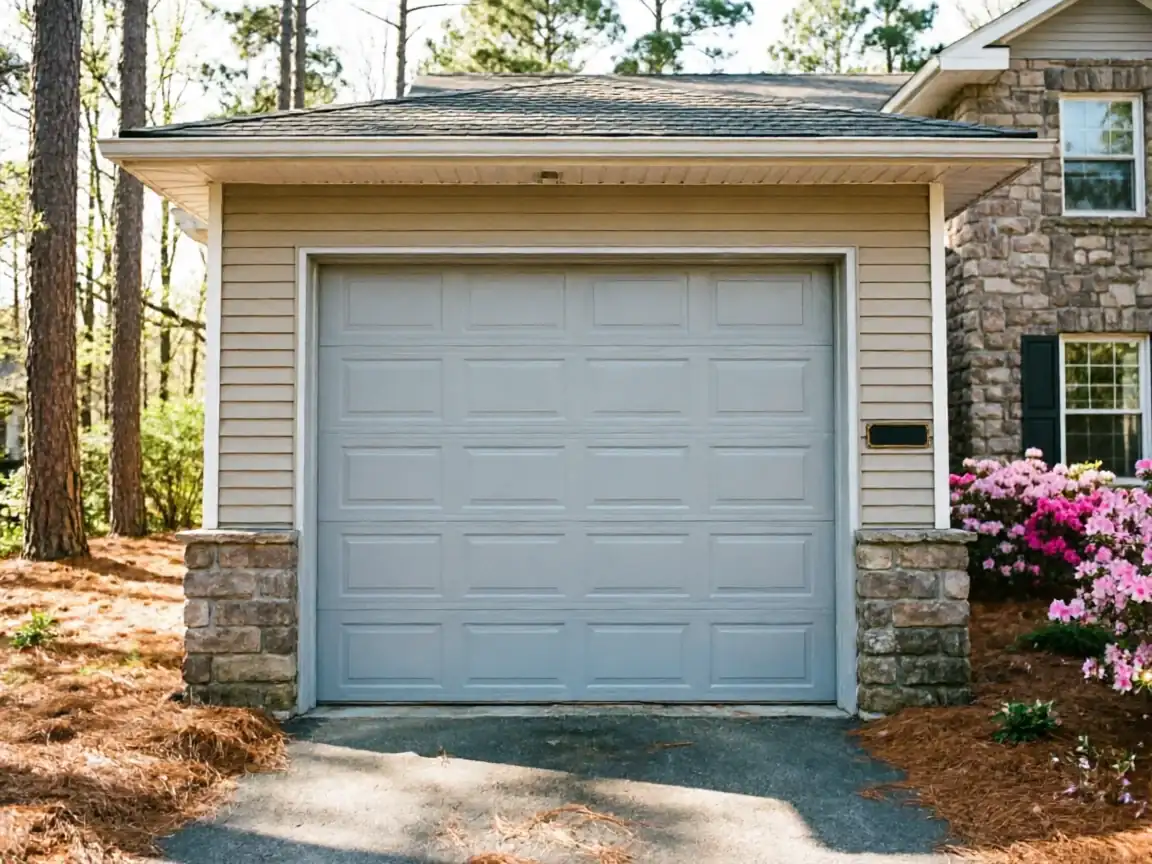
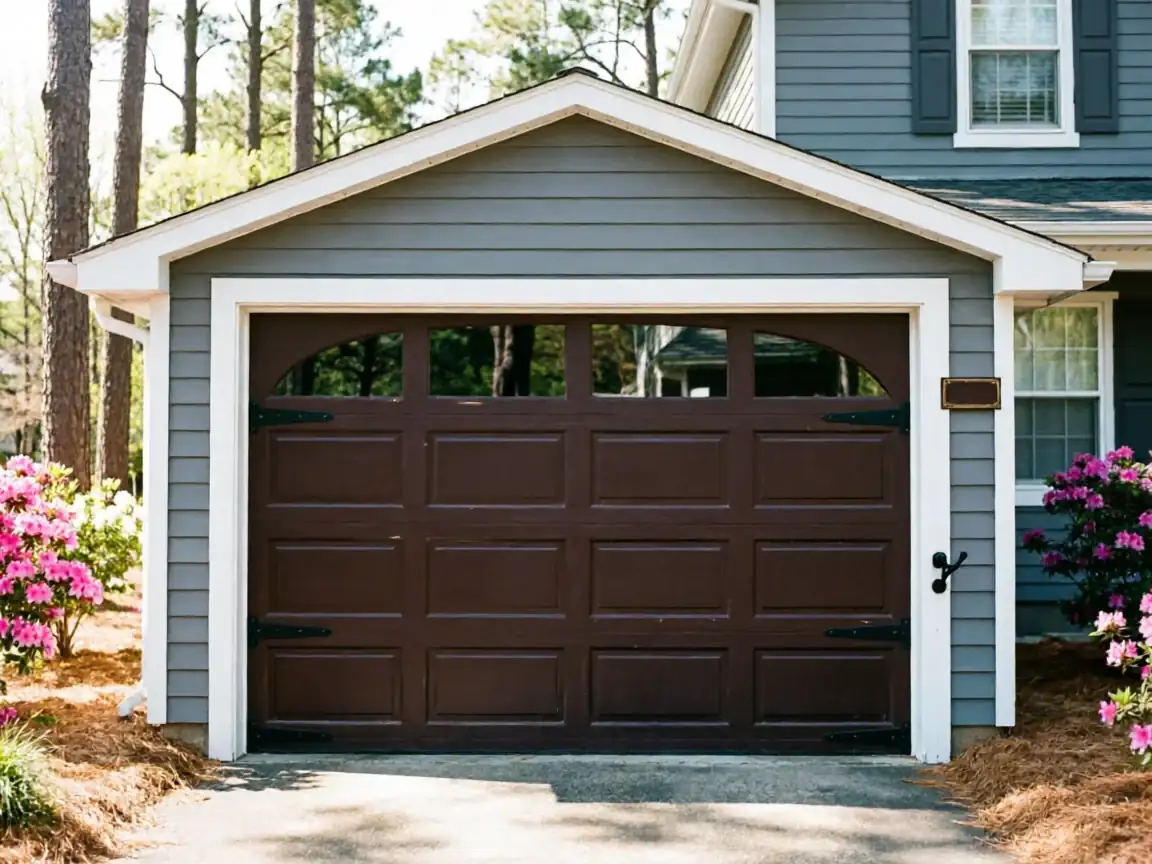
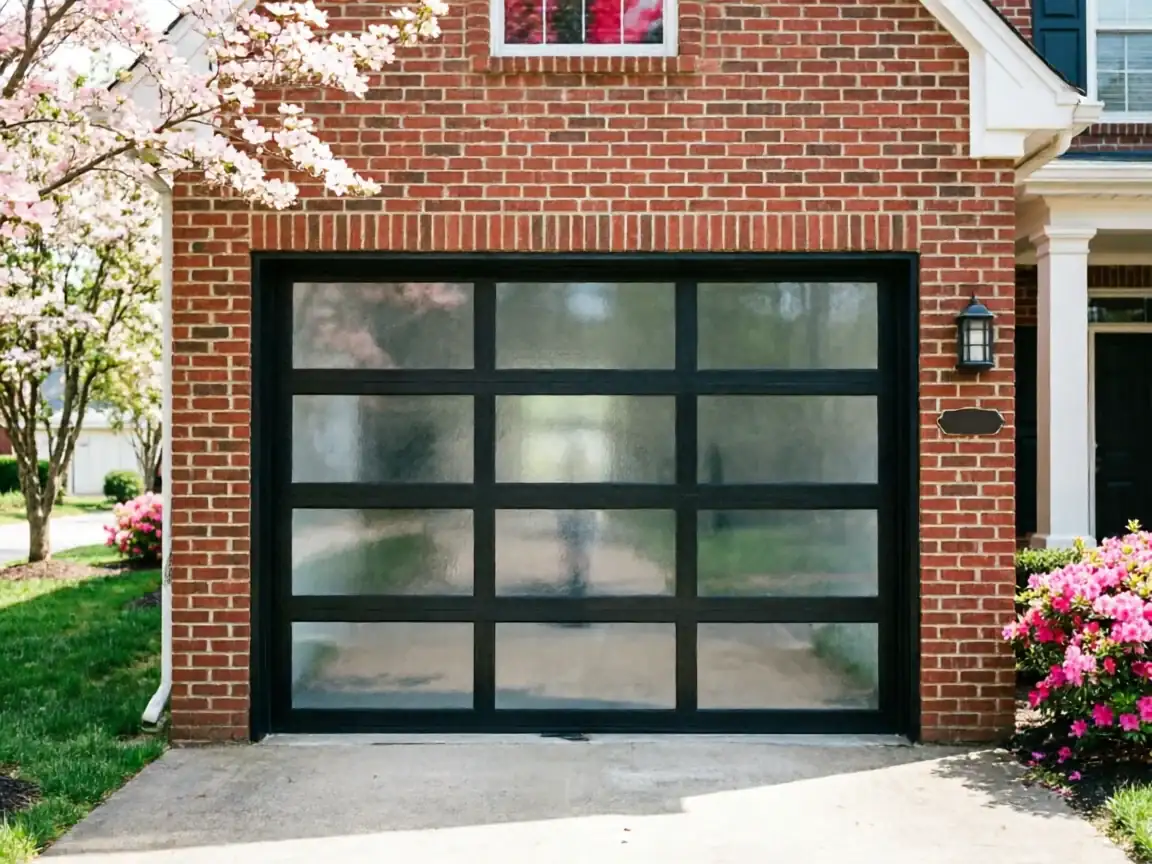
Most houses in South Cleveland went up in the early-to-mid 1980s, which means the garage door on them is almost always a steel sectional door, two or four panels, hung on steel rollers riding in a galvanized track. That's the standard build for the era - nobody out here was putting in nylon rollers or aluminum doors in 1984, and very few owners have swapped the originals since. Steel rollers have a stamped axle and a riveted stem, and after close to forty years of opening and closing, the axle wears oval, the roller edge chips, or the stem bends just enough that the door starts binding in the track.
The cold-moderate climate here doesn't help. Temperature swings make steel contract and expand against the track slightly, and over enough winters that works the roller bearing loose faster than it would in a warmer region. You'll usually hear it before you see it - a grinding or popping sound as the door travels, worse at the top or bottom of the run where the curve in the track puts more load on the roller. By the time a roller actually jumps the track, it's typically been complaining for months.
This isn't a defect in the door. It's just what happens to steel-on-steel hardware after four decades of daily use in a house built when Reagan was in his first term.
How Long It Takes
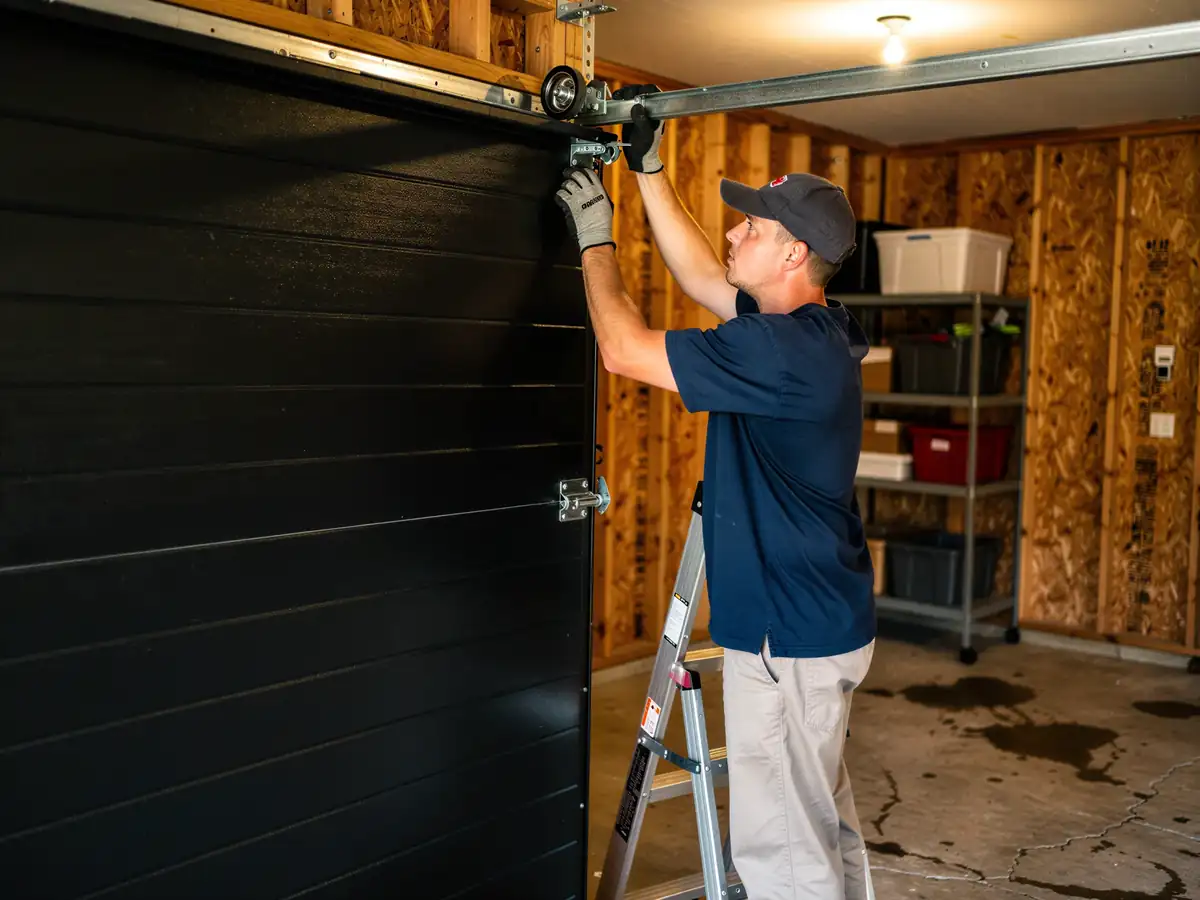
A straight roller swap on a standard two-car door, once a tech is on site, usually runs under two hours
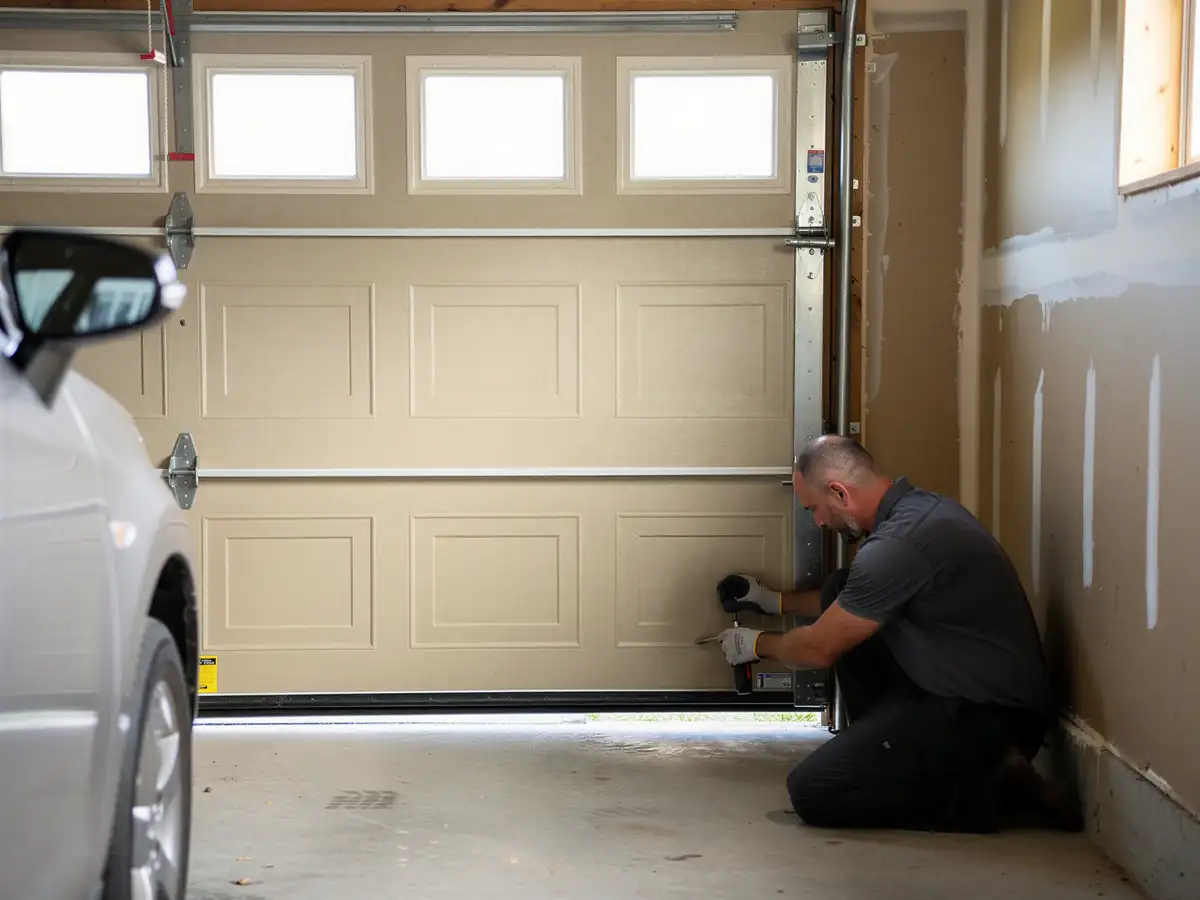
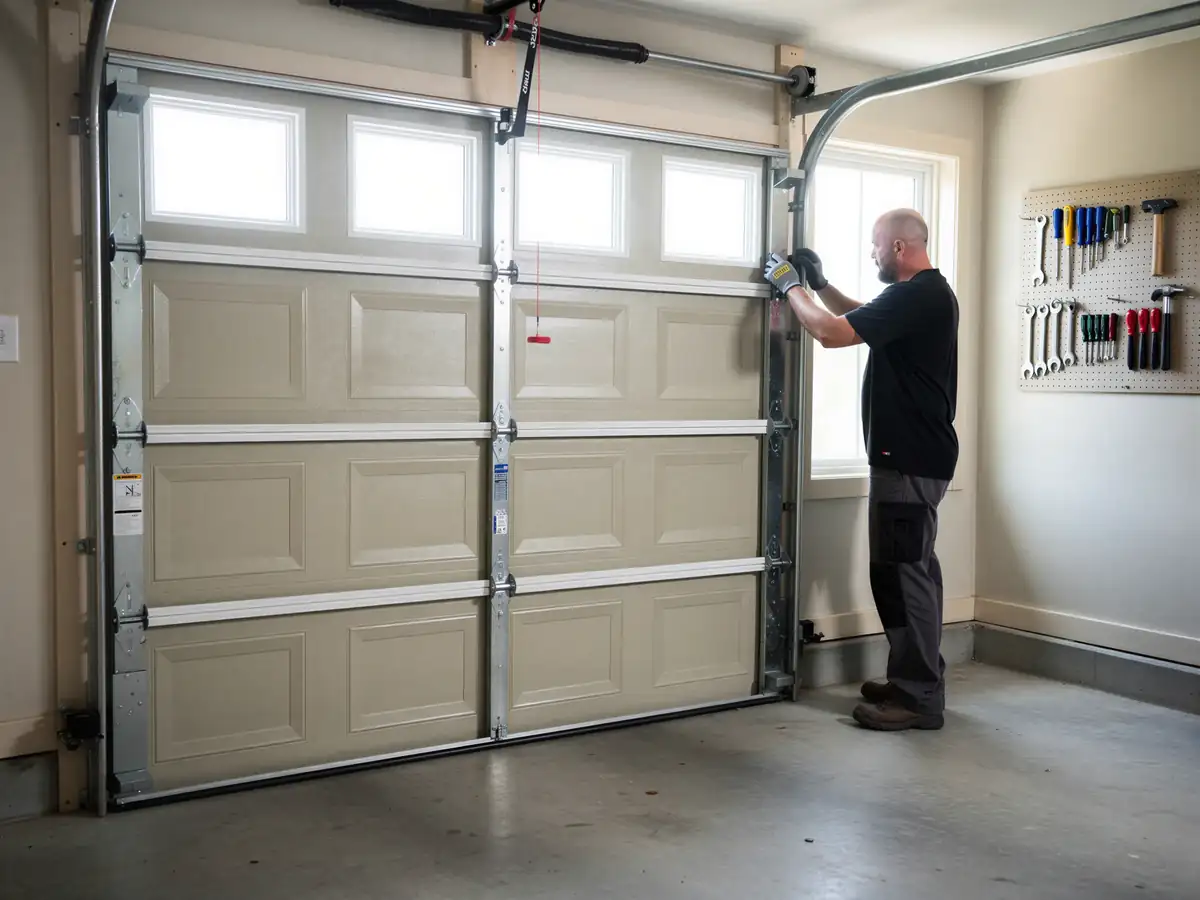
Pull the old rollers, check the track for scoring, set new ones, run the door a few cycles to confirm it tracks true. If the track itself is bent or the hinges are worn along with the rollers, which is common on a door this age, that adds time because the track has to come off the jamb and get reset or replaced in sections.
What we can't promise is a same-day fix if the door needs a part we don't carry on the truck
Some older track hardware isn't a common stock item anymore. On most jobs that's not an issue since rollers themselves are a standard part, but it's worth knowing before you plan your day around it.
Can You Do This Yourself
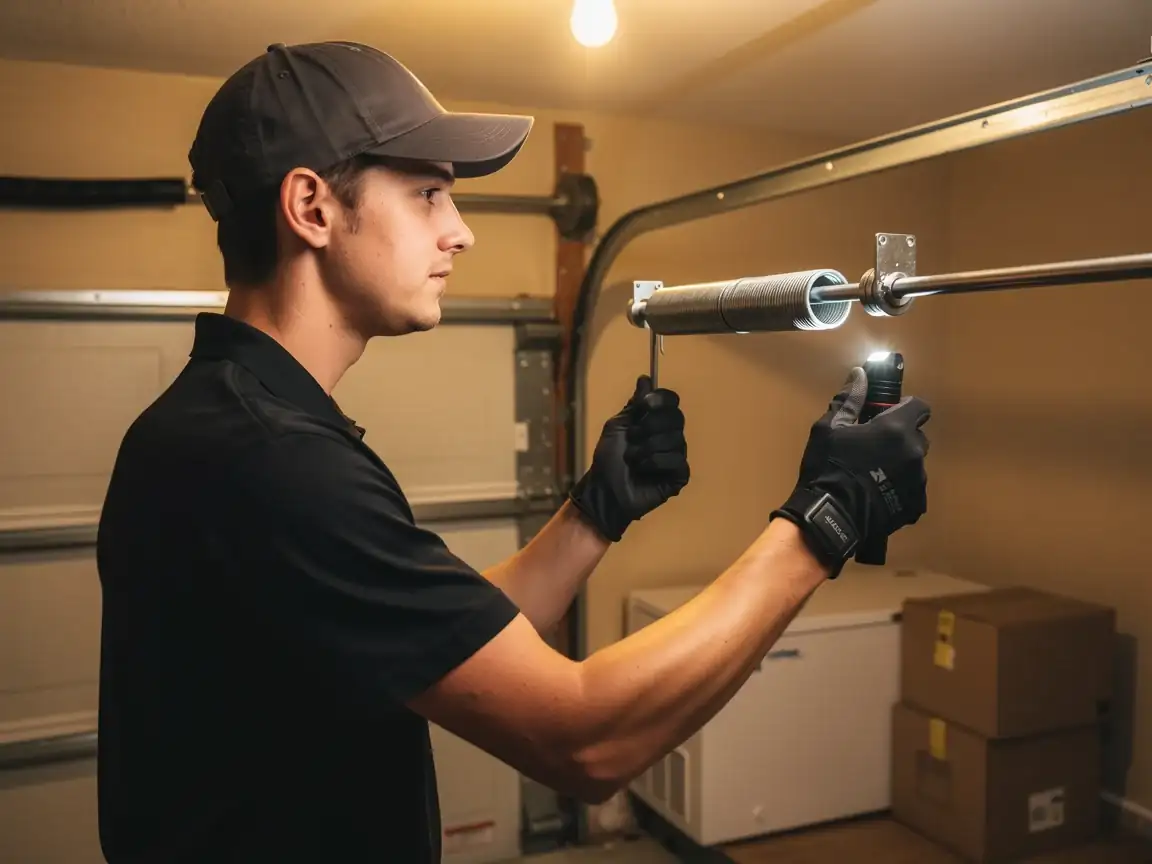
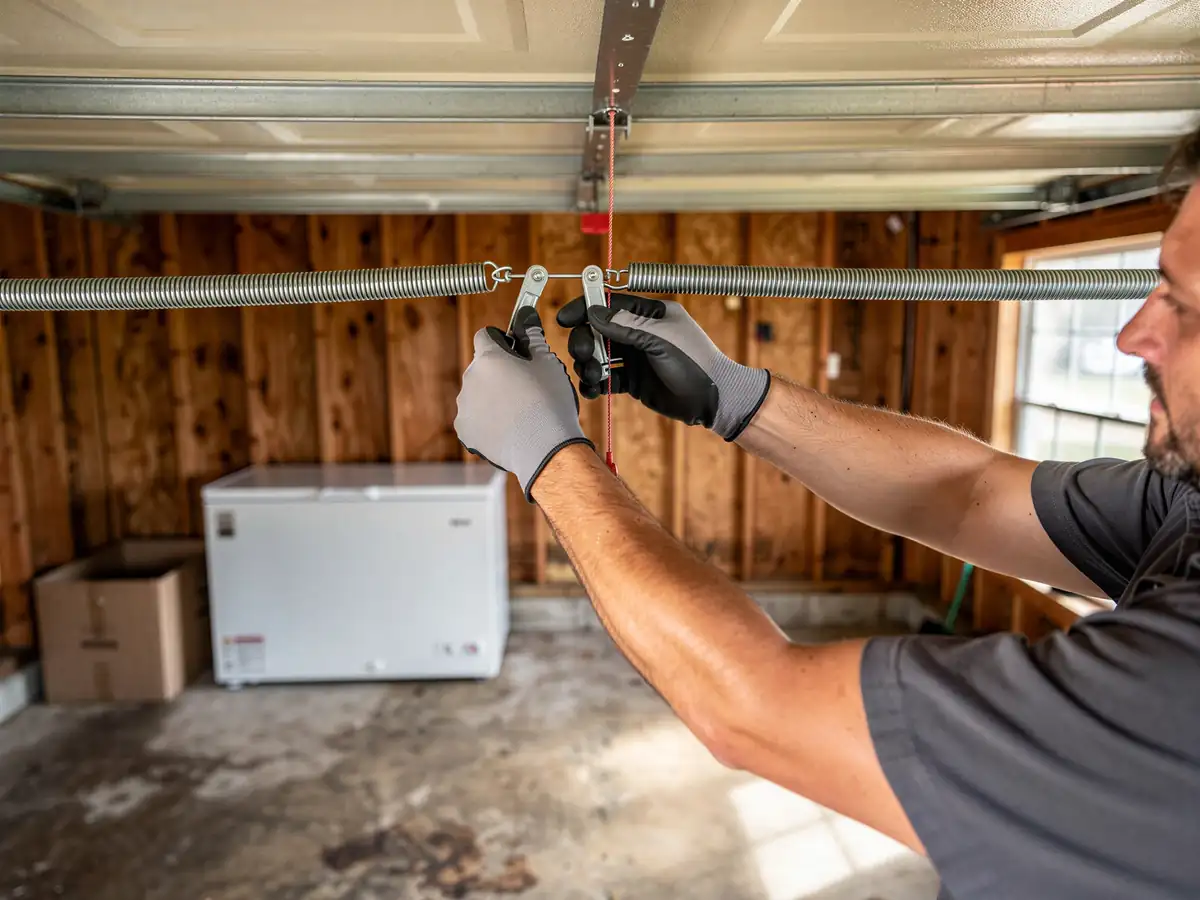
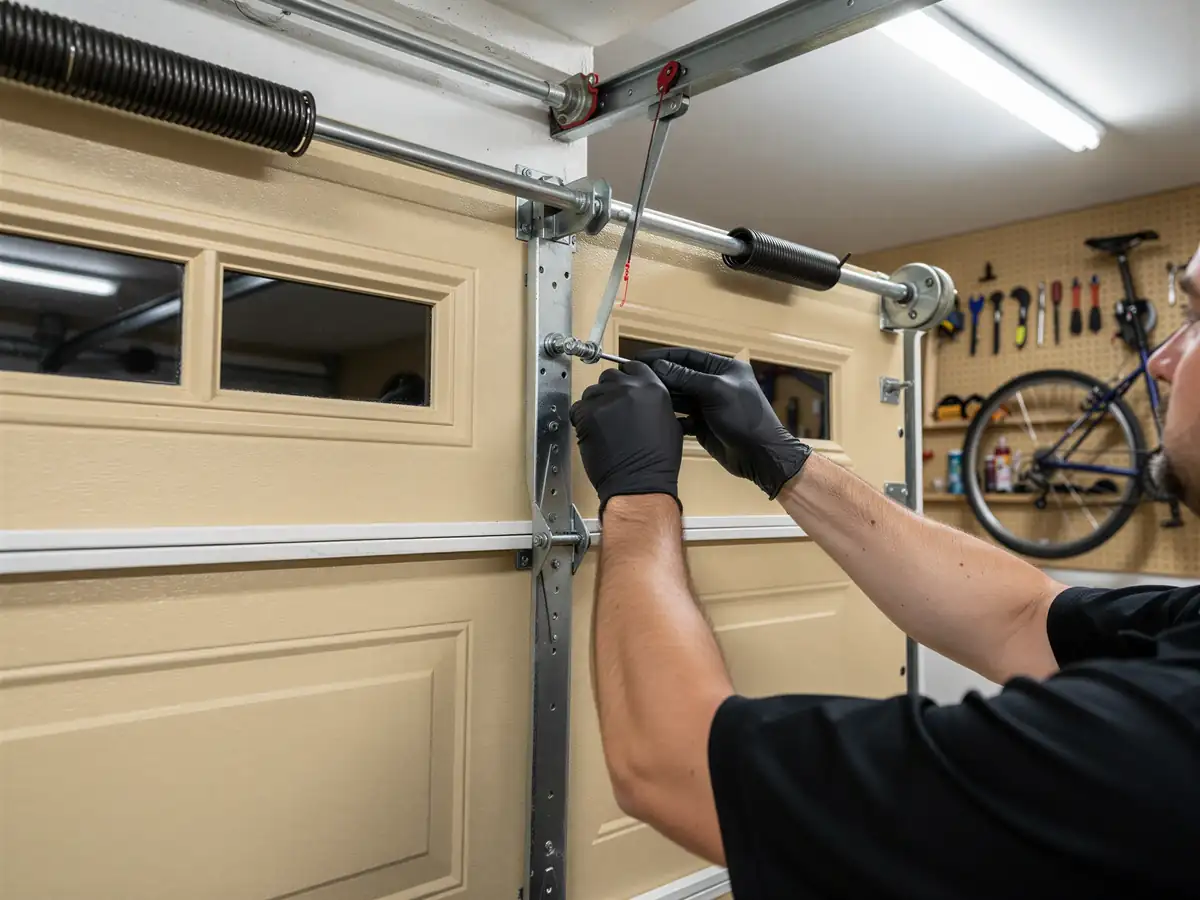
Swapping a roller on a garage door under tension is not a job to learn on your own door. The risk isn't really the roller - it's the torsion spring above it, which is storing enough force to break a wrist or worse if the door comes down wrong while you've got a panel off its track. If you're confident and the door is in the fully open position with the opener disconnected, replacing a single bottom roller that's already slipped partway out of the track is sometimes manageable with the right tools.
What's not a DIY move is a full roller set on a door that's binding, grinding, or sagging on one side - at that point you often can't tell whether it's the rollers, the track, or the spring without taking weight off the door safely, and that's exactly the part that hurts people. If your door is sticking or jumping and you're not sure why, that's the point to call rather than guess.
Getting It Booked In
We cover South Cleveland out of Cleveland, about 5 miles up the road, so a visit here means a short drive, not a dispatch across the county. Tell us what the door is doing - grinding, catching, one side dropping - and whether it's an opener-equipped door or manual, and we can usually tell you over the phone if it sounds like a roller problem or something else in the hardware.
See our South Cleveland area page for what else we handle out this way, or the full roller replacement writeup for the Cleveland service area if you want the broader rundown on parts and process.
What You Are Seeing
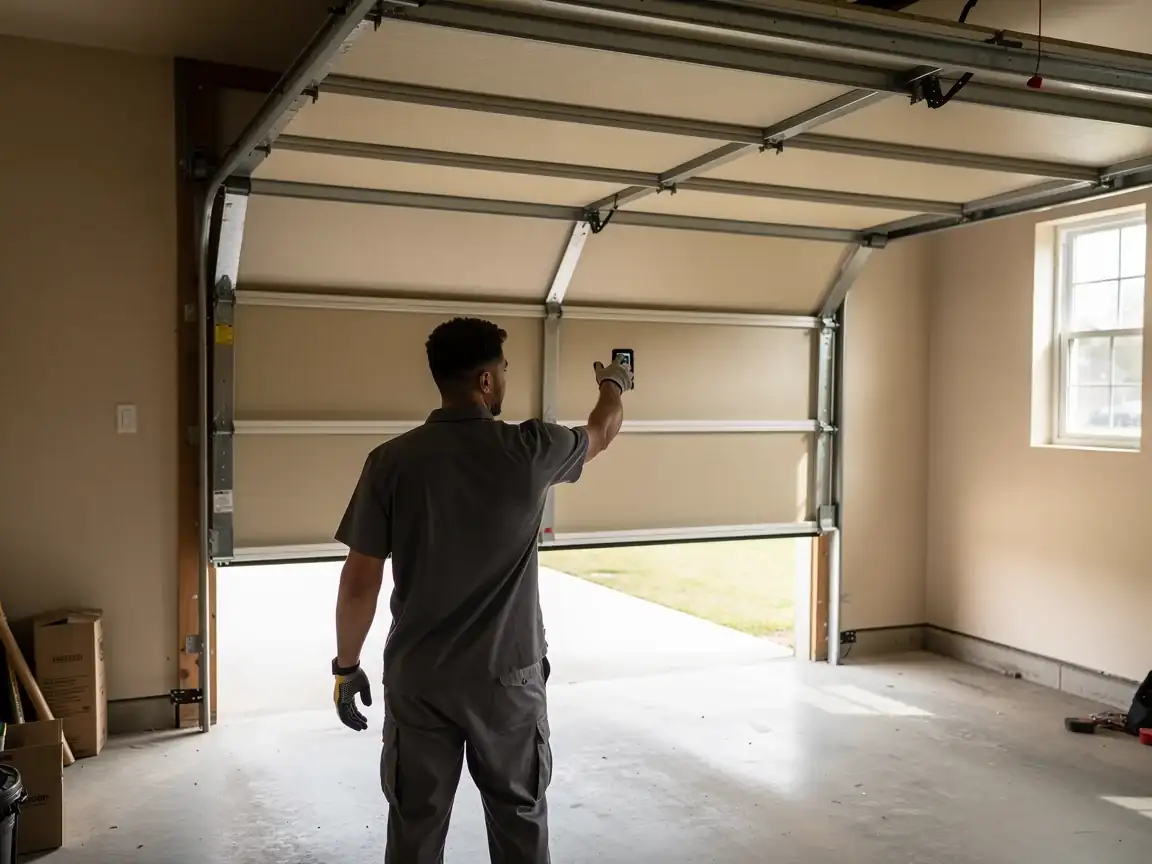
If your door is from the original build on a South Cleveland house - mid-1980s, give or take a few years either side - and it's started grinding, hesitating, or dropping unevenly on one side as it travels, that's the roller wear pattern you'd expect from steel hardware at this age. A roller that's actually cracked or missing a chunk of its wheel will usually show a visible flat spot if you look at it while the door is open and the opener unplugged.
What it's less likely to be: a broken spring usually shows up as the door feeling heavy or refusing to stay open partway, not as a grinding noise during travel. And an opener problem tends to show up as the door not responding to the remote at all, not as a mechanical sound while it's moving. If you're hearing noise during the cycle, start with the rollers and the track before assuming it's something bigger.