Stocked Parts
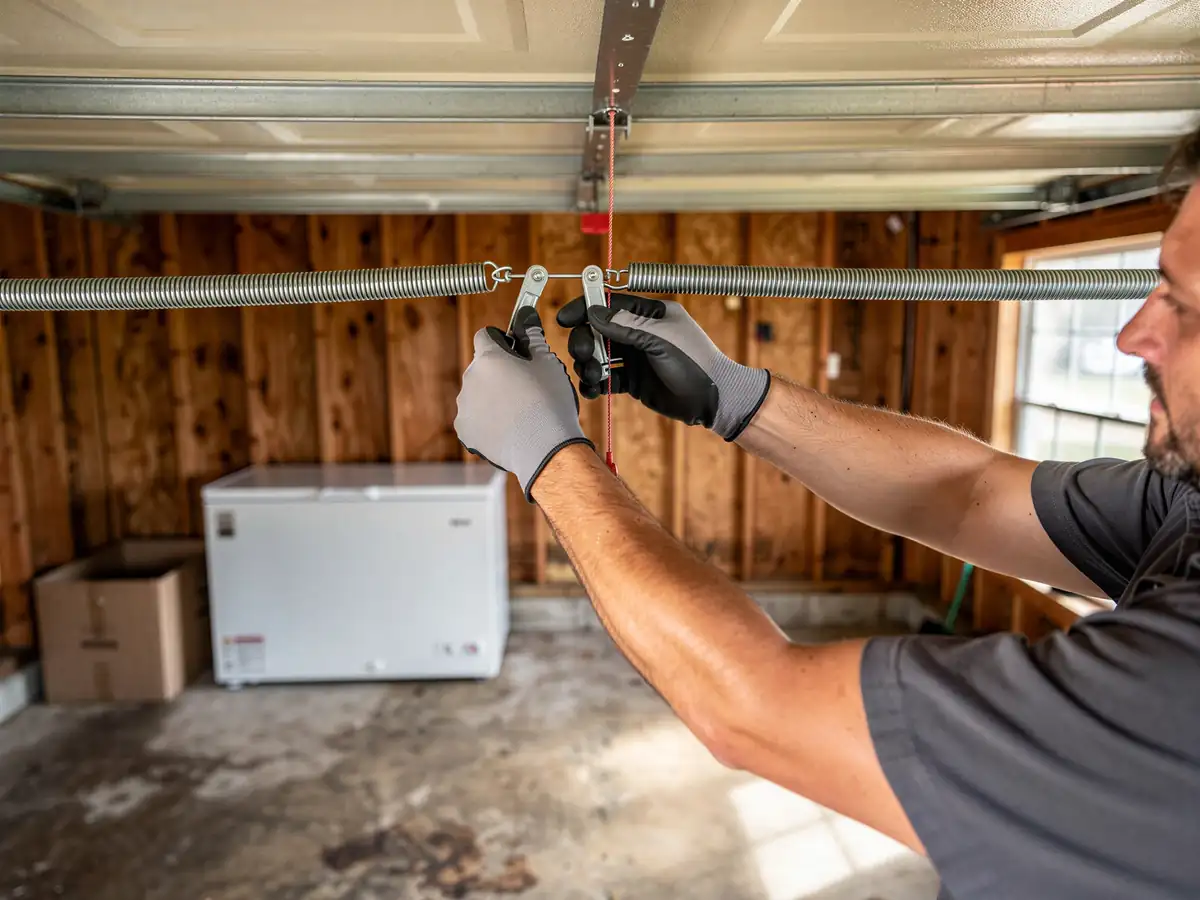
Most houses in Hopewell went up around 1985, which puts the neighborhood square in the stretch of construction that ran from the late 1960s through the early 2000s across this part of the service area. That means steel panel doors on the hardware common to that build window: extension springs mounted along the horizontal track, or early torsion setups with the spring sized to a lighter door than what's sold today. Openers from that era are usually chain-drive, with a gear-and-sprocket drive system that wears down to a grinding whine long before the motor itself quits.
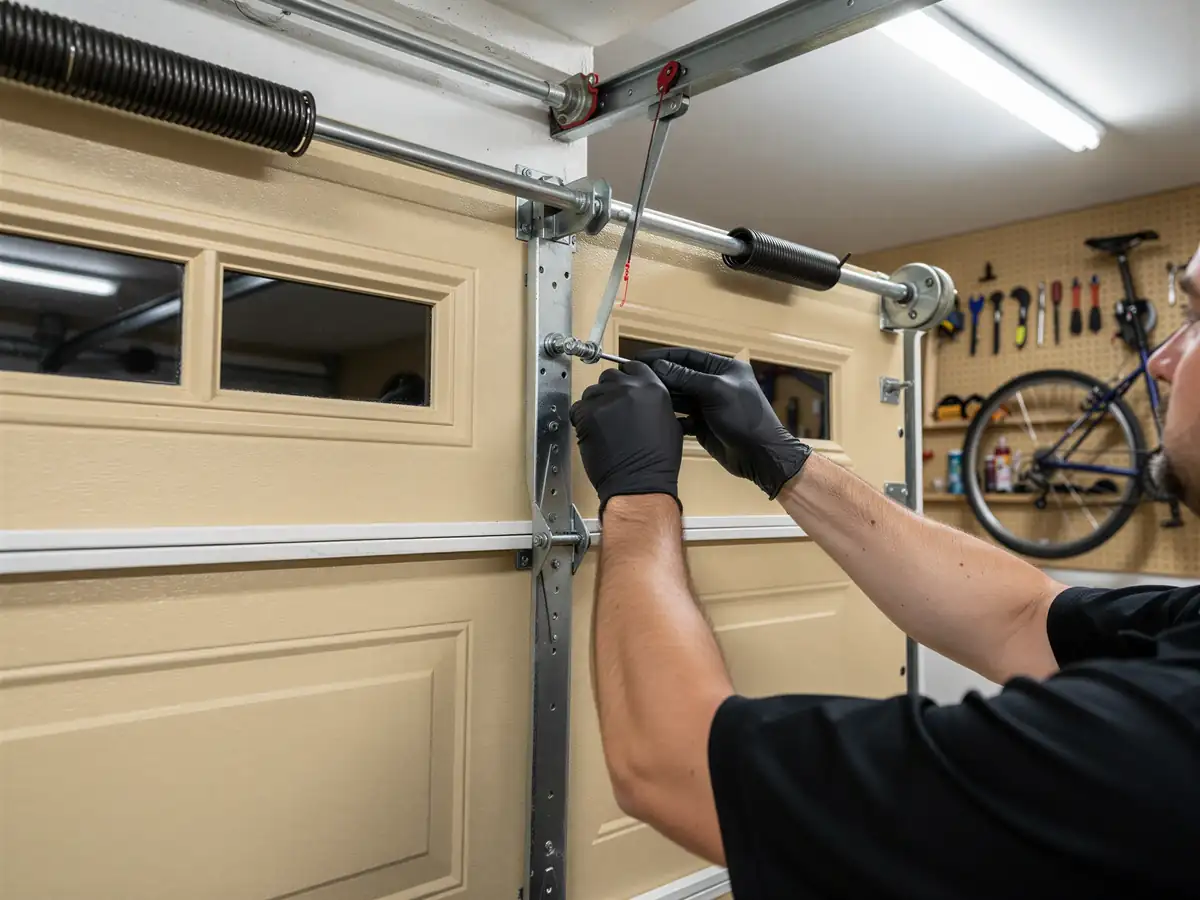
We carry torsion springs in the wind and wire sizes that match 1980s door weights, nylon and steel rollers for the track widths used then, galvanized lift cable, and the drive gears and capacitors that fail inside chain-drive openers of that age. We travel the 5 miles out from Cleveland with that stock already on the truck, because a second trip for a part we should have had the first time wastes your afternoon and ours.
How We Fix It
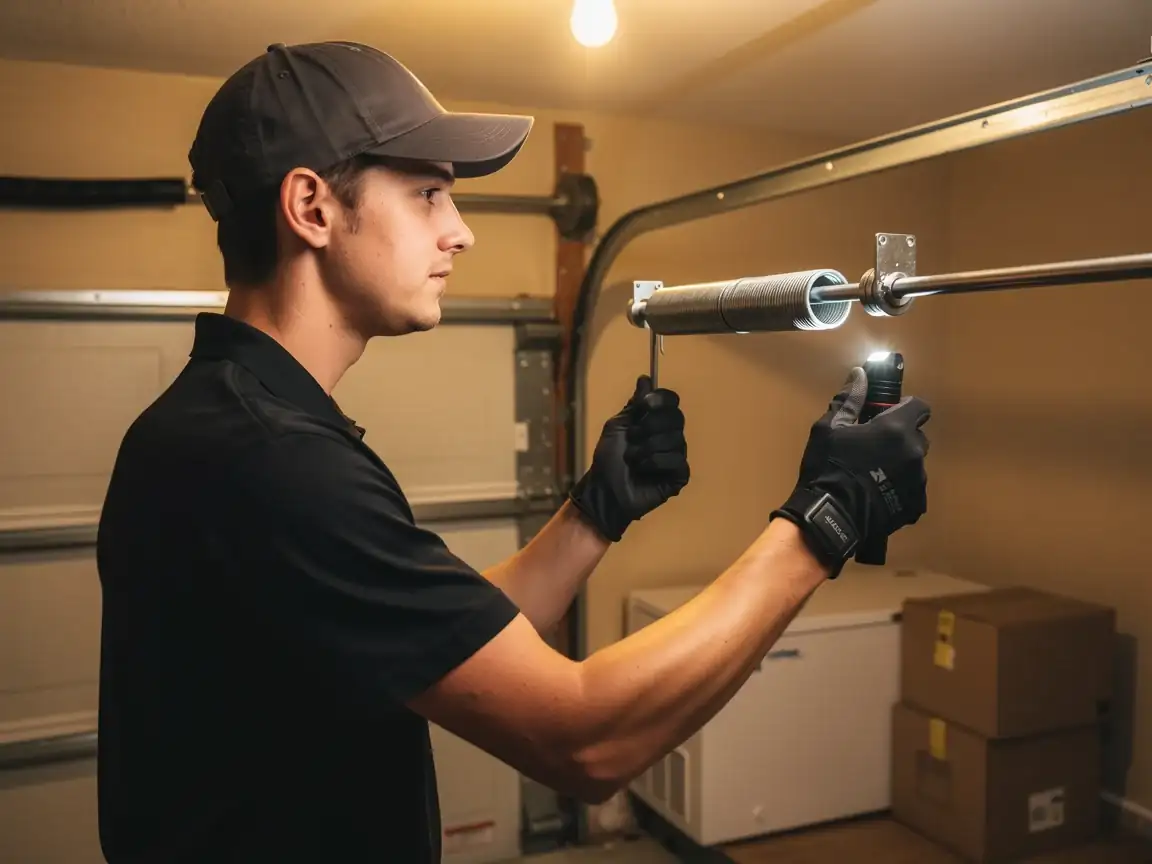
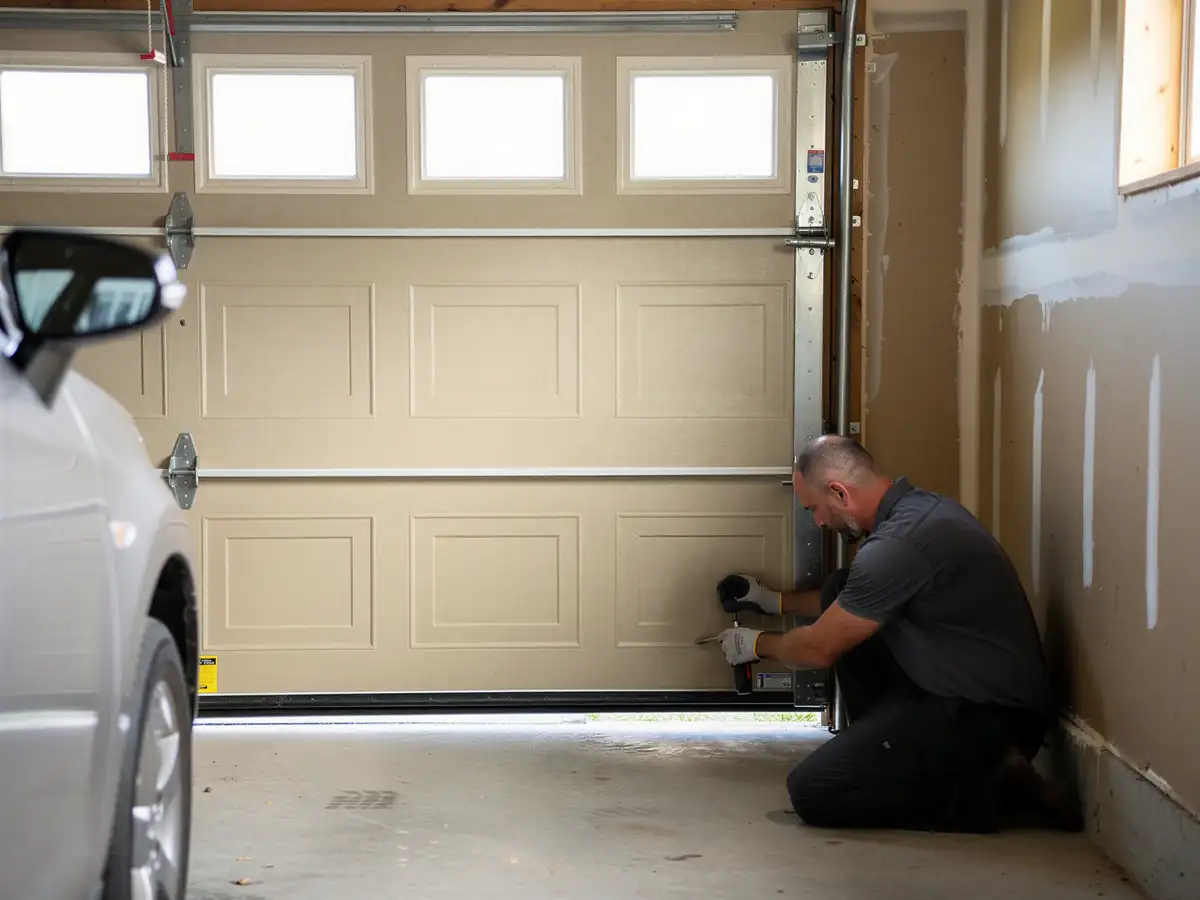
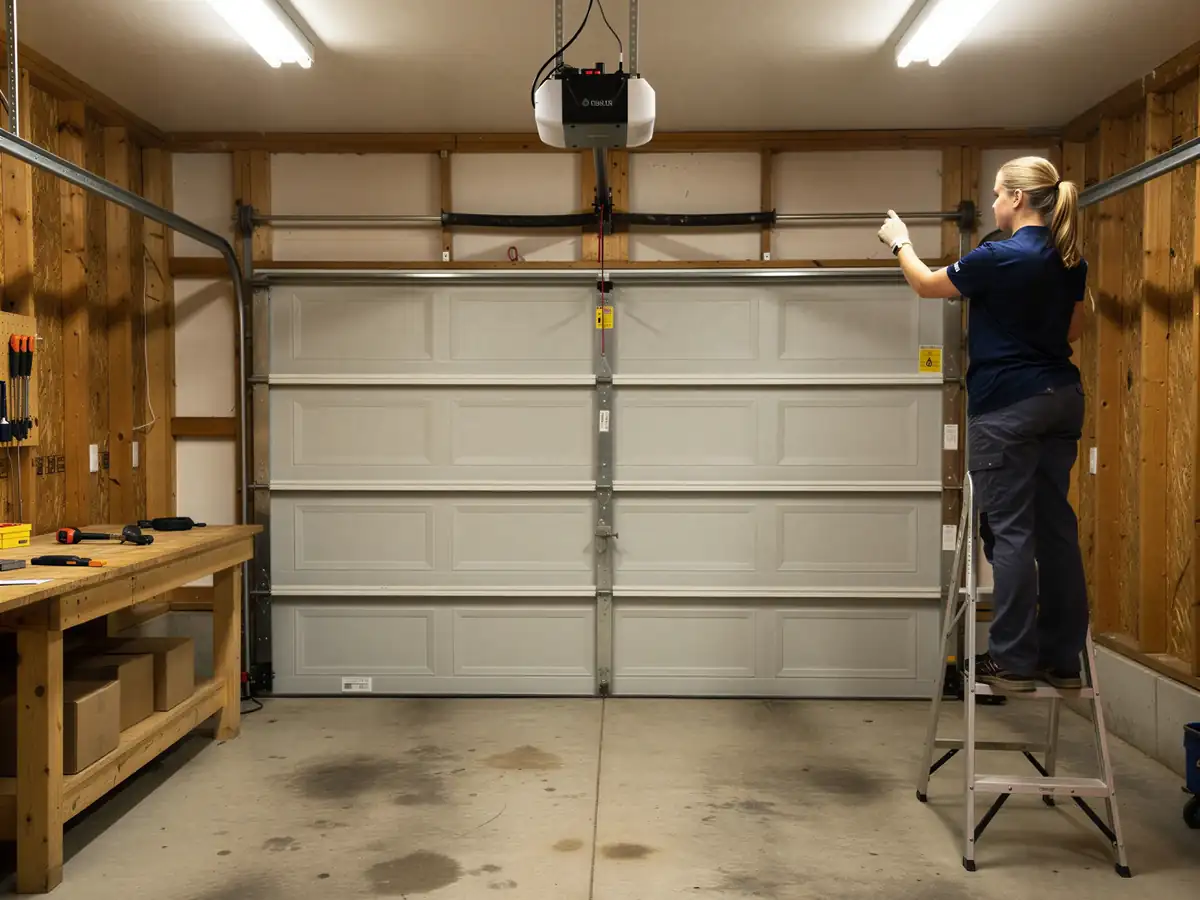
First thing on site is figuring out which spring system the door actually has
Since a house built in 1985 could have either extension springs or torsion, and the fix is different for each. We check the track for the kind of binding that shows up after three and a half decades of use - bent rail, worn end bearing, a jamb bracket pulled loose from repeated flexing.
If the opener is original to the house, the logic board is often the weak point before the motor is
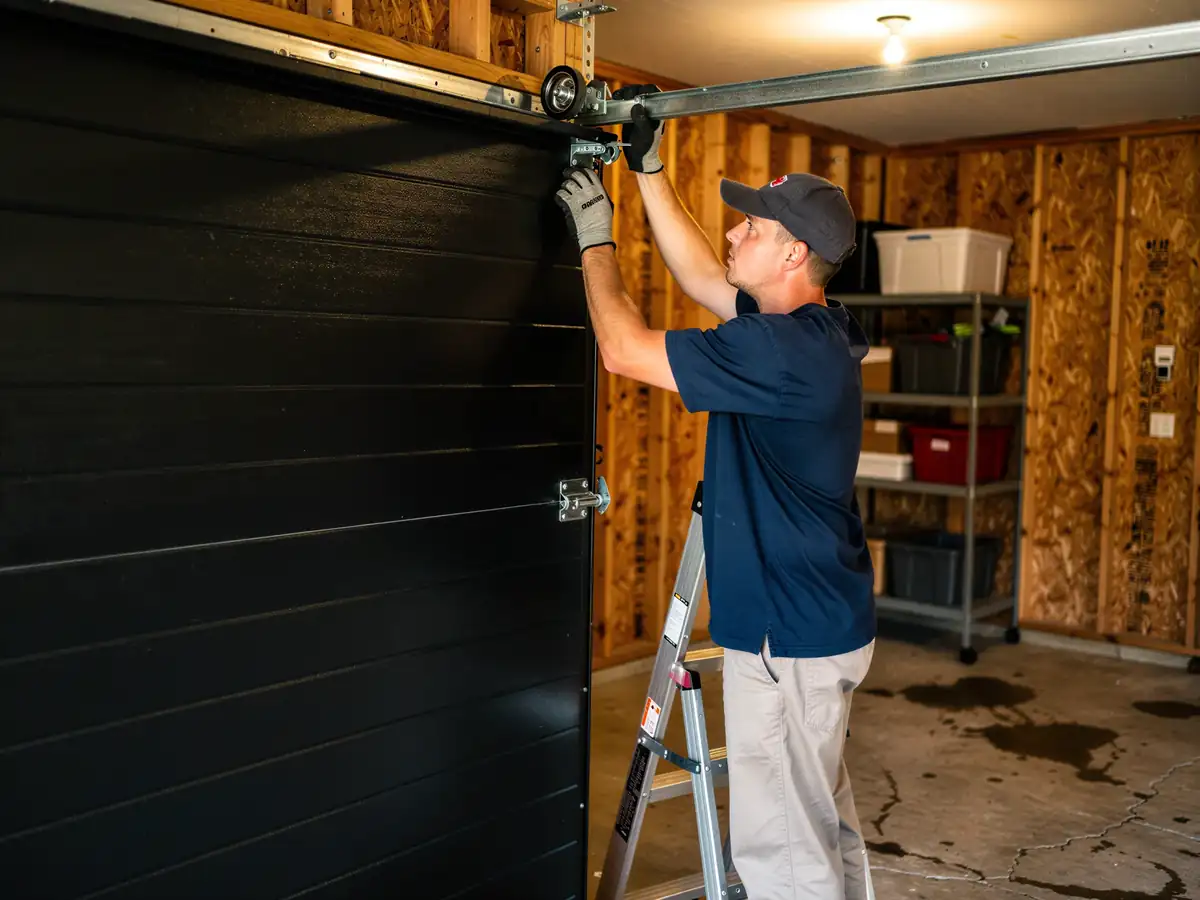
So we test that before we recommend a full opener swap. Cable and rollers get replaced as a set when one has failed, because mismatched wear on the other side throws the door off balance within a few months anyway.
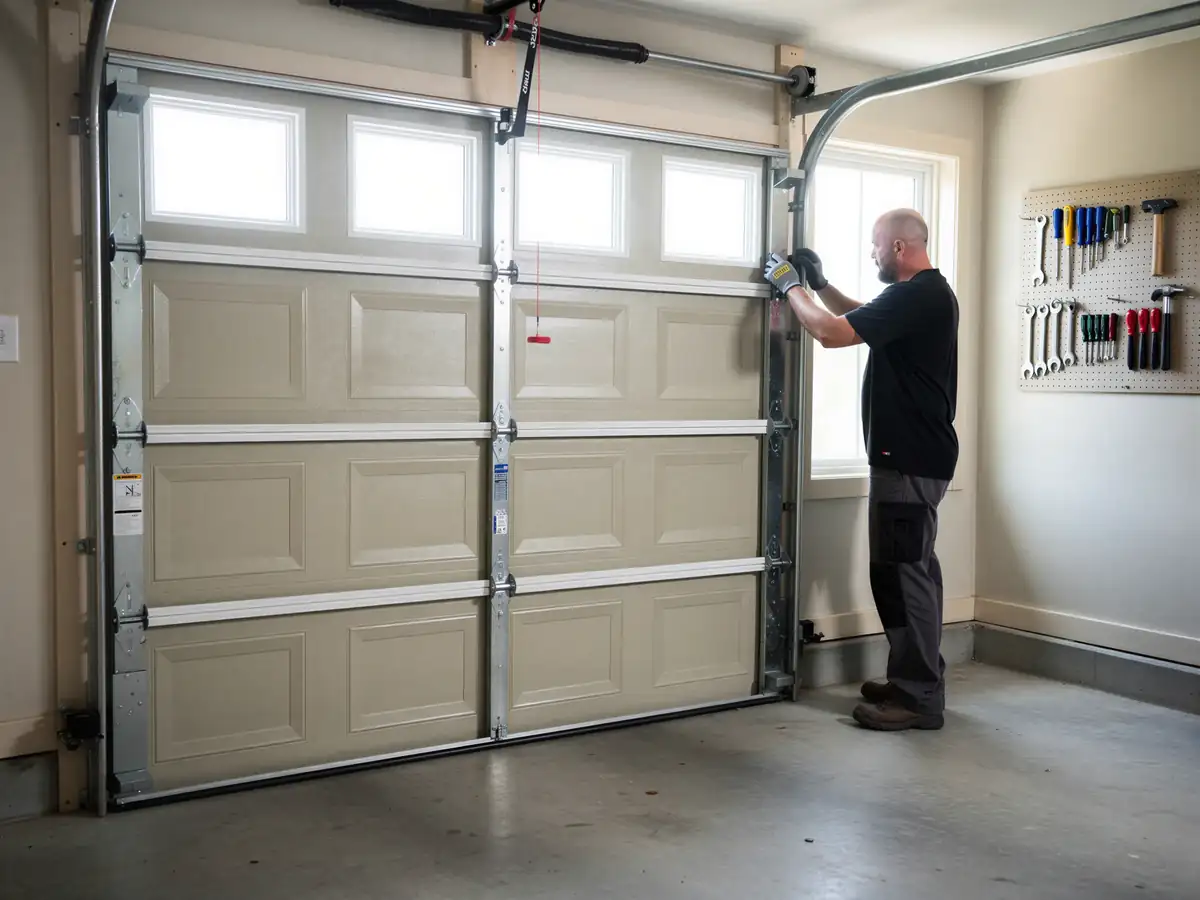
We set spring tension by hand, balance the door so it holds at waist height without drifting
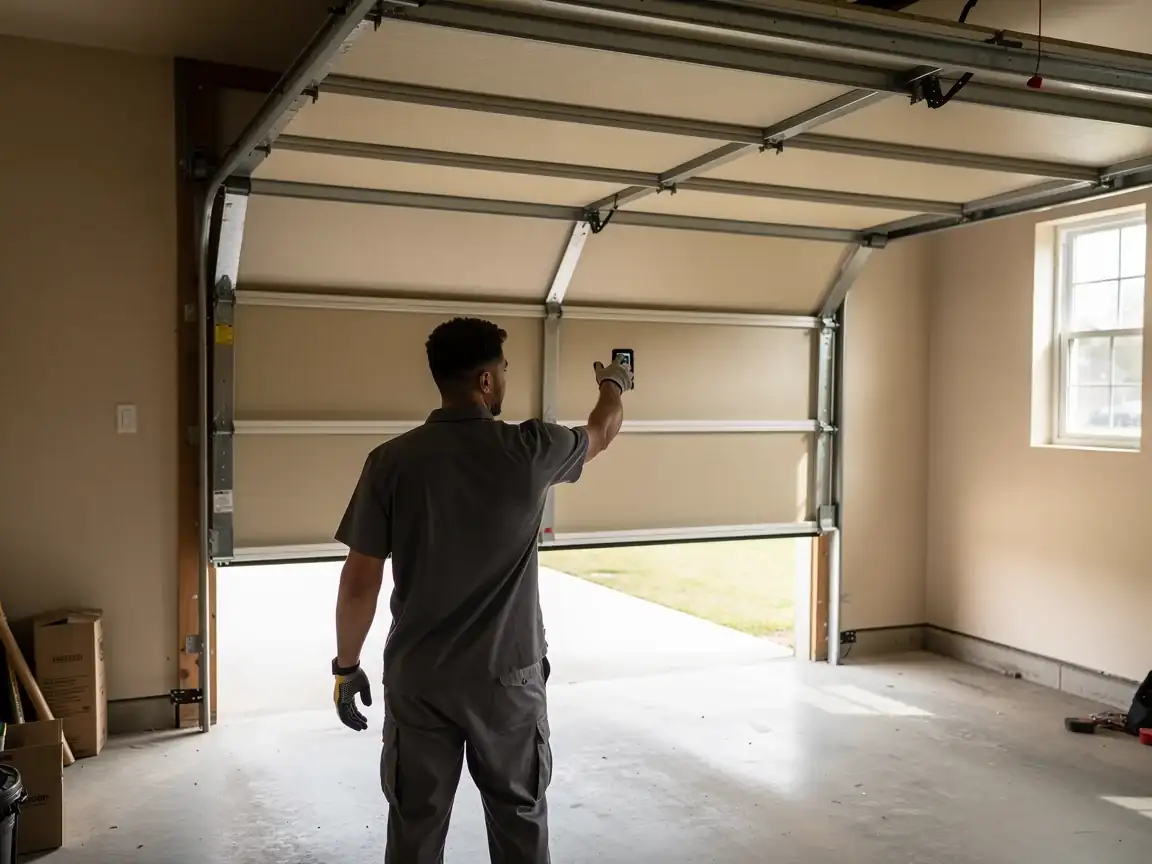
And run it through a full open-close cycle with the auto-reverse test engaged before we call the job done. Coming from Cleveland means we bring the full kit each trip rather than guessing what a 1985-era door needs and hoping we packed right.
What You Pay
We don't post a flat number here because the two hardware types common to Hopewell's 1985-median housing stock price out differently - extension spring replacement is a different job than torsion, and a chain-drive opener swap costs more than a logic board fix. What we can tell you is what drives the number up or down on site: whether both springs need replacing instead of one, whether the track is bent enough to need a full rail instead of a spot fix, and whether the opener's drive gear is salvageable or the unit is done.
One honest limit: if your door is still running original 1985 extension-spring hardware and the drums or cable pulleys are worn, we'll often tell you replacement beats another round of patch repairs, because sourcing exact-match parts for hardware that old gets harder every year. We'd rather say that up front than sell you a short-term fix on a door that's going to fail again in a season.
What You Are Seeing
On a door this age, the door reversing partway up usually means a weak extension spring is no longer carrying its half of the weight, so the opener's motor strains and the safety sensor reads it as an obstruction. A chain-drive opener that's started grinding or clicking before it lifts the door is telling you the gear is stripped, not that the motor is failing - those are two different repairs with two different costs.
Binding partway through the cycle, where the door catches and jerks instead of moving smooth, points to a bent track or a roller that's worn oval instead of round, both common once a door built around 1985 has logged three decades of cycles. If the door drops fast on the way down instead of lowering under control, that's a cable or spring that's lost tension, and it's not safe to keep running the door until it's fixed.