Can You Do This Yourself
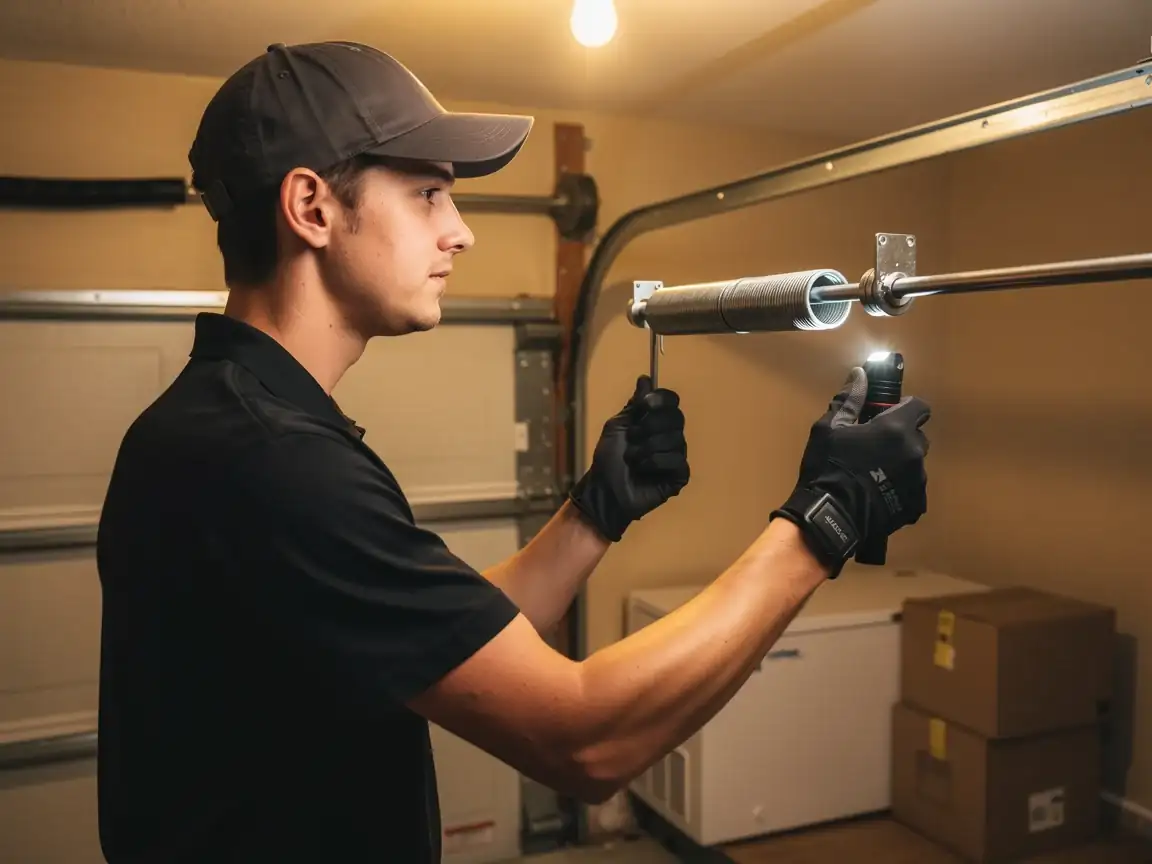
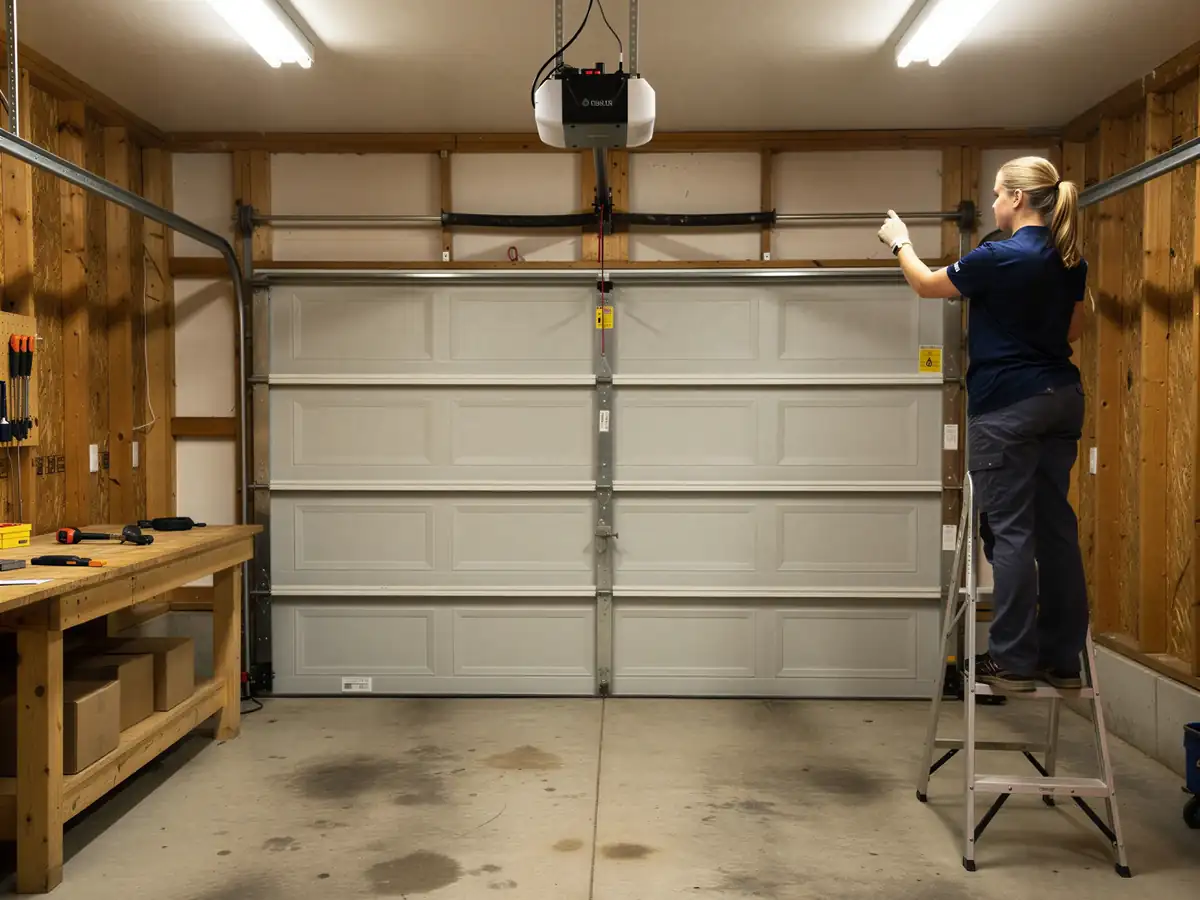
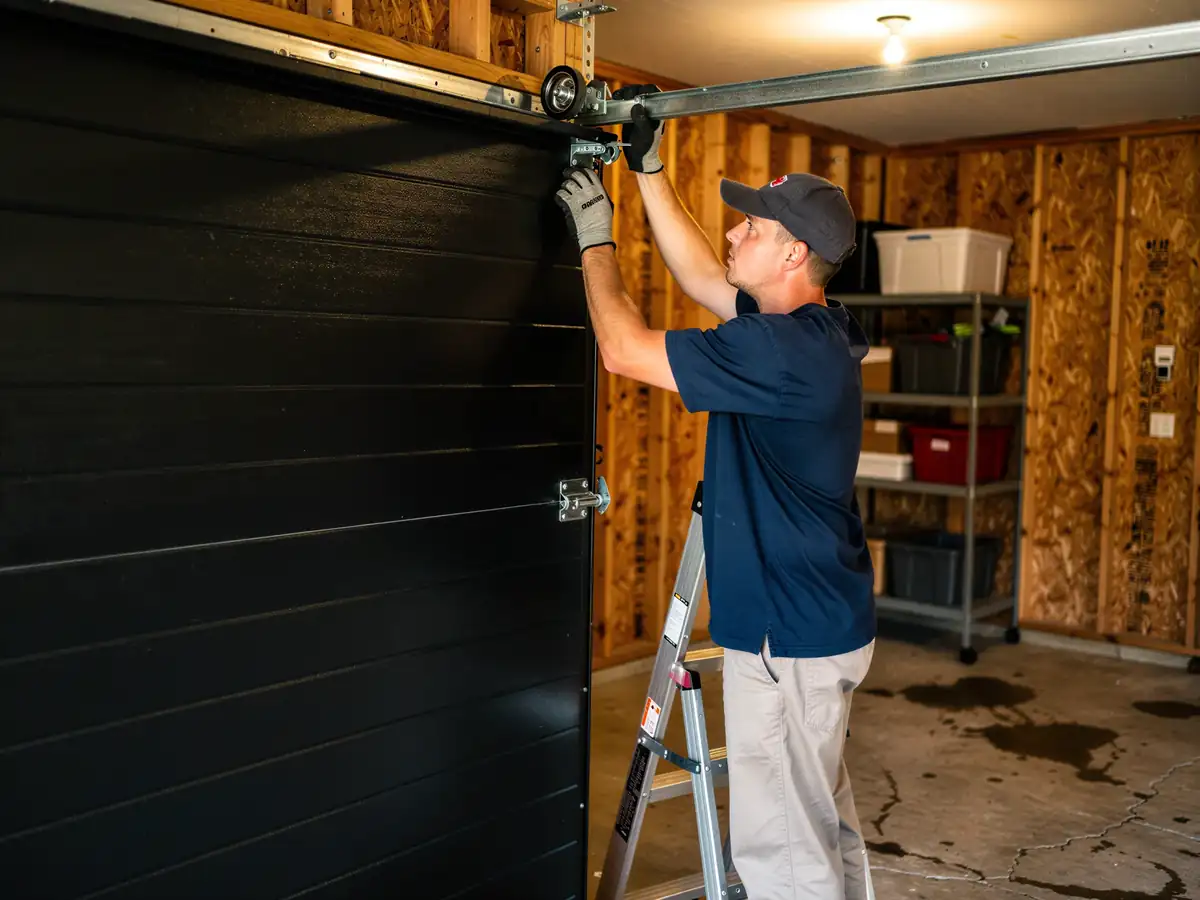
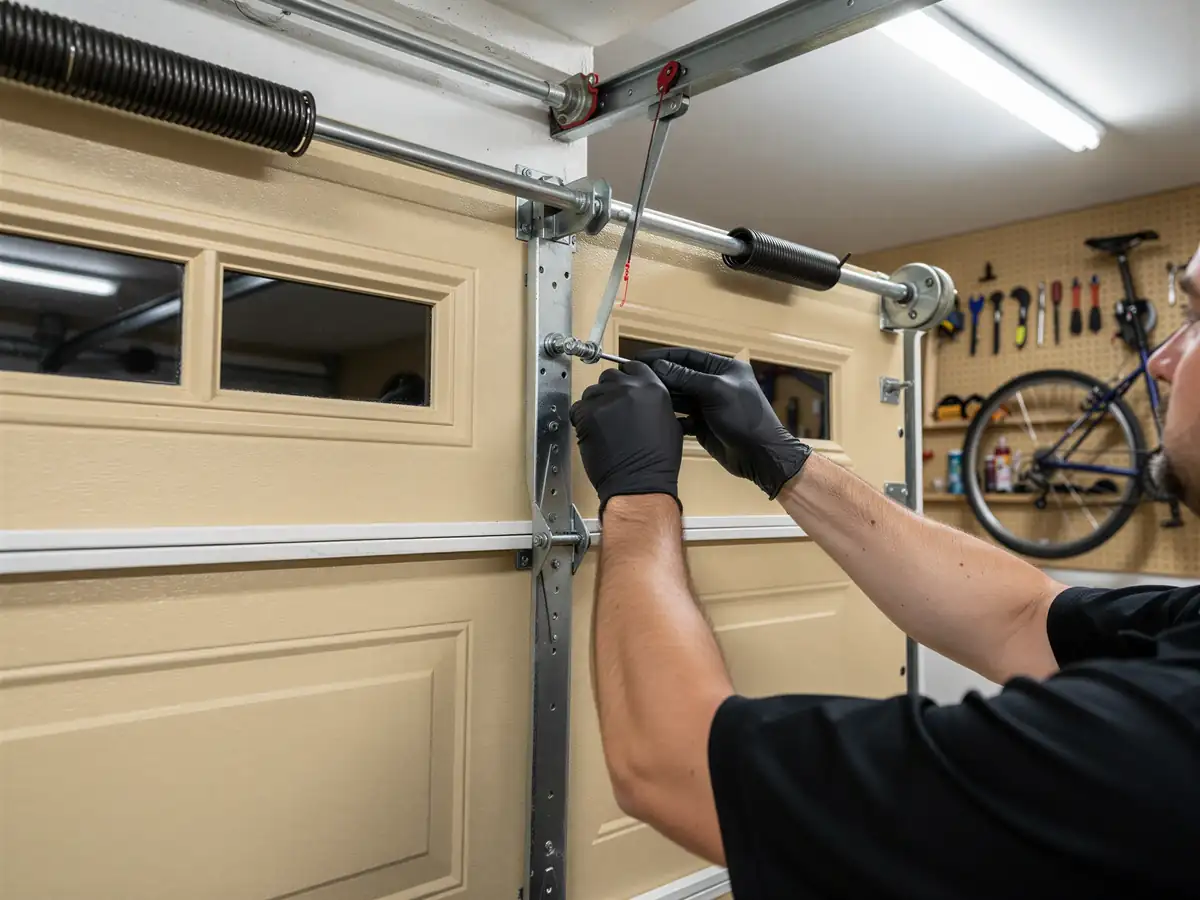
A torsion spring holds enough stored energy to break fingers or worse, and that doesn't change based on which side of the county you're on. What does change here is what you're working with: most Soddy-Daisy garage doors date to around 1985, which means you're often looking at a single torsion spring on an older galvanized shaft rather than the dual-spring setups common on newer builds. Winding cones, end bearing plates, and the spring itself on a door this age have usually seen close to forty years of cycles, so even a clean DIY attempt can meet hardware that's seized or stripped. We're not going to pretend we can talk you through it safely in a few paragraphs - a repair like this takes winding bars, the right cone size for the shaft diameter, and knowing when the drum or cable is also due. If the door won't move at all, or one side of the spring looks stretched and uneven, that's a sign the bracket or shaft is under strain too, and that's not a one-person job on a ladder in the driveway.
What You Are Seeing
With housing in this part of the service area mostly going up through the 1980s and 90s, the failure pattern on a 1985-built door tends to follow a script: the spring finally gives after years of temperature swings working the steel, and in a cold snap it often lets go on the coldest morning of the stretch, since cold steel is more brittle and less forgiving on a spring that was already fatigued. The service area sits in a moderate-cold climate band, not the harsh freeze-thaw of the upper Midwest, but still enough seasonal swing to shorten the working life of an original spring versus one in a warmer climate. A door that's suddenly heavy to lift by hand, or that slams the last foot on the way down, is usually telling you the spring has already lost tension - not that the opener motor is failing.
Stocked Parts
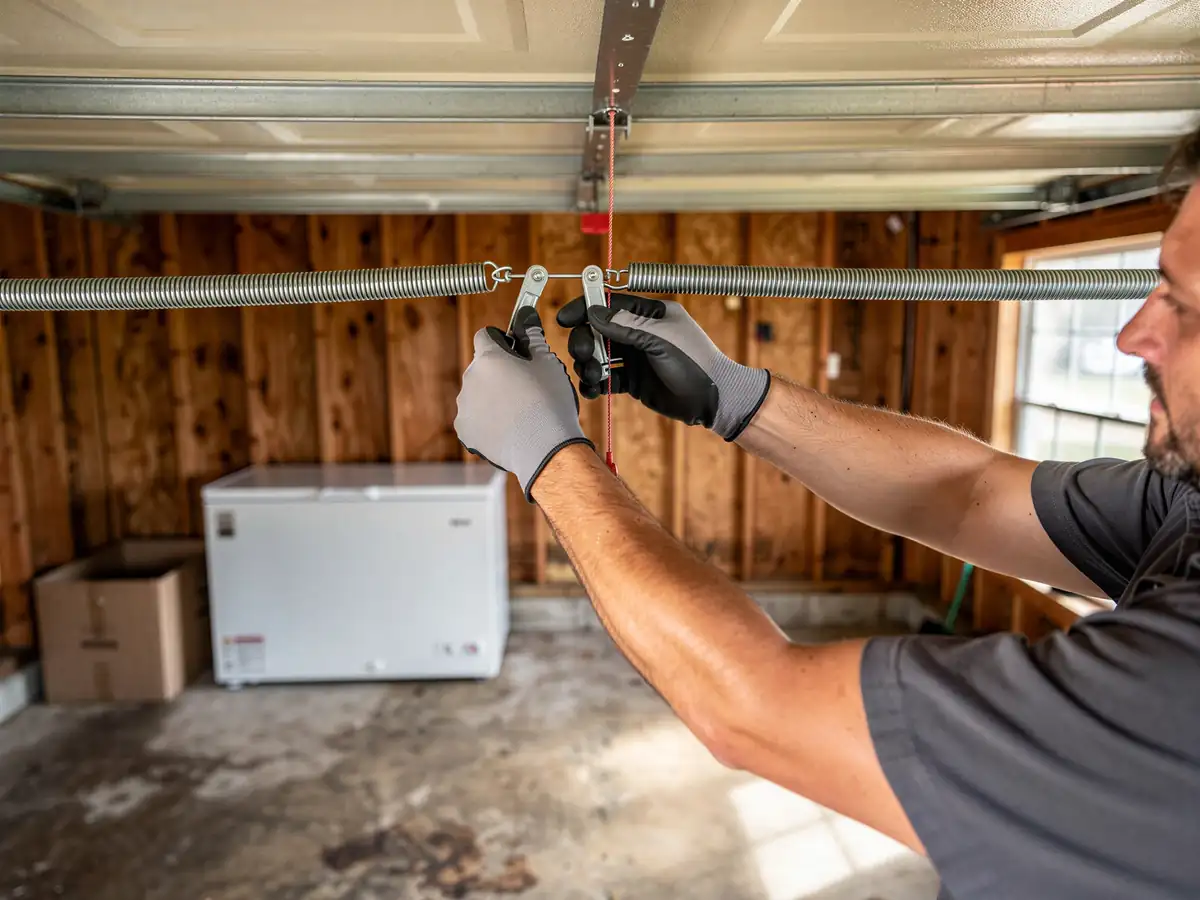
For a door built in the mid-1980s, the common torsion spring sizes and standard-lift drums are parts we carry on the truck, since that era of door is still the most common stock across the broader service area. Where it slows down is anything custom to that specific house - an odd headroom conversion, a spring wound for a non-standard door weight, or an extension-spring setup instead of torsion, which shows up more on older single-car doors. Those get special-ordered, and we'll tell you that on-site rather than pretend we have it in the truck. We don't inflate your wait by holding you a slot; we just let you know honestly when a part has to be ordered in.